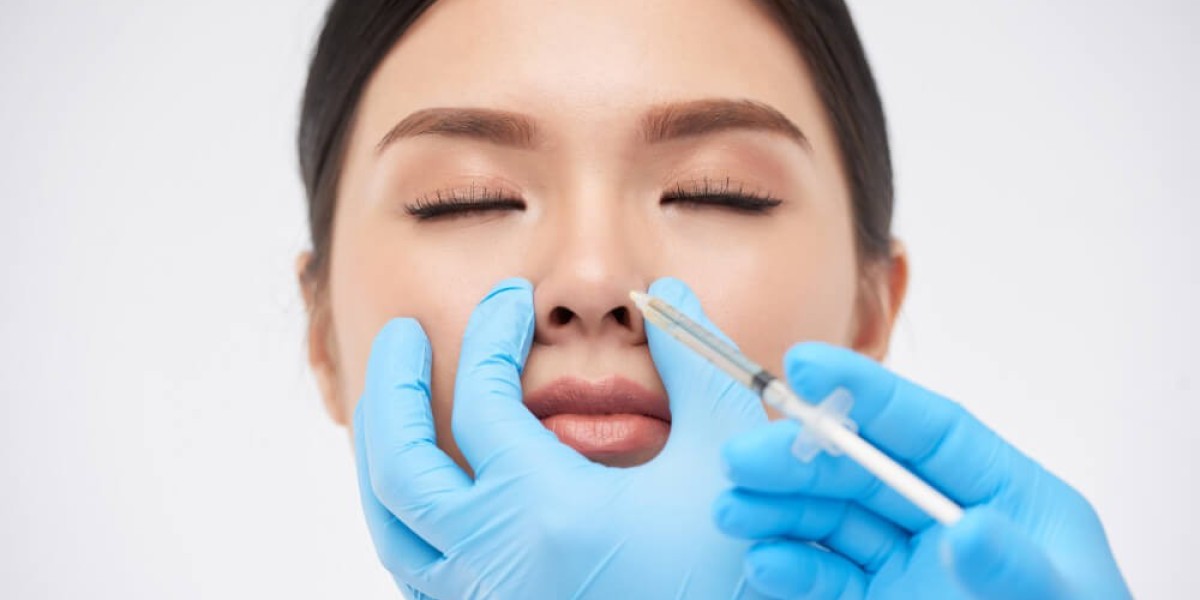

A crooked nose is often a concern for individuals who feel their facial features appear uneven or asymmetrical. This condition may be present from birth, develop after an injury, or become more noticeable as facial structure changes over time. In many cases, the appearance of a crooked nose affects how balanced the face looks from different angles. Non-surgical rhinoplasty has gained attention as a method that focuses on improving the appearance of nasal symmetry without invasive procedures. It is generally viewed as a cosmetic shaping approach rather than a structural correction method, which makes it important to understand what it can and cannot achieve.
How Non-Surgical Rhinoplasty Works for Nose Shape
Non-Surgical Rhinoplasty in Dubaiis a technique that involves subtle reshaping of the nose using temporary volume enhancement methods. Instead of altering bone or cartilage, it focuses on adjusting the surface appearance of the nose. By carefully adding volume in specific areas, the nose can appear more aligned and balanced.
This approach is often used to smooth out visible irregularities, improve symmetry, and create the illusion of a straighter nasal bridge. It works by visually correcting uneven contours rather than physically moving nasal structures. Because of this, the results depend heavily on facial proportions and the nature of the crooked appearance.
Can It Fix a Crooked Nose Effectively?
Non-surgical rhinoplasty can improve the appearance of a mildly crooked nose by creating better visual balance. In cases where the asymmetry is slight or mostly related to surface irregularities, the nose may appear noticeably straighter after the adjustment.
However, when the crookedness involves significant structural deviation, such as pronounced bone or cartilage misalignment, the approach is more limited. Instead of fully correcting the shape, it works by creating optical alignment that makes the nose look more even from the front and profile views. This means the improvement is often aesthetic rather than anatomical.
Factors That Influence the Results
Several elements influence how effective the outcome may appear for a crooked nose. The degree of asymmetry plays a major role, as minor deviations are easier to visually balance than severe ones. Facial structure also contributes, since the nose must harmonize with other features such as the eyes, cheeks, and chin.
Skin thickness can also affect how subtle changes are seen on the surface. In some cases, individuals with smoother contours may notice more defined improvements, while others may see softer refinements. The technique used to distribute volume is another important factor in achieving a balanced appearance.
Limitations of the Approach
While non-surgical rhinoplasty can enhance appearance, it does not physically straighten the internal structure of the nose. This means it cannot correct issues related to bone alignment or significant cartilage deviation. Instead, it focuses on optical correction.
Another limitation is that the results are temporary, gradually fading over time. Because of this, individuals seeking long-term structural correction may not find this approach suitable for more complex nasal asymmetry. It is best understood as a visual enhancement method rather than a permanent reshaping solution.
What People Usually Expect from the Outcome
People often expect the nose to look straighter and more centered after the adjustment. In many cases, the bridge may appear smoother, and the overall profile may look more aligned. The perception of symmetry can improve even if the internal structure remains unchanged.
It is also common for the nose to appear more refined in photographs and from different viewing angles. However, expectations need to remain realistic, especially when dealing with noticeable deviations. The technique is most effective when the goal is subtle improvement rather than complete transformation.
FAQs
Can a crooked nose appear straighter after this approach?
A crooked nose can appear straighter when the surrounding contours are adjusted to create better visual alignment. The change is based on enhancing symmetry rather than physically altering the bone or cartilage structure.
How long does the improvement usually last?
The visible improvement generally lasts for a limited period before gradually fading. The duration varies depending on individual facial characteristics and how the nose responds to the reshaping approach.
Is the change permanent?
The change is not permanent, as the method focuses on temporary structural enhancement of appearance. Over time, the nose gradually returns to its original look.
Who may benefit most?
Individuals with mild to moderate nasal asymmetry may benefit the most. Those seeking subtle refinement and improved facial balance often find the visual effect more noticeable than those with significant structural deviation.
Conclusion
Non-Surgical Rhinoplastycan offer a way to improve the appearance of a crooked nose by enhancing symmetry and creating a more balanced facial look. While it does not physically straighten the internal nasal structure, it can make the nose appear more aligned through careful visual adjustment. Its effectiveness depends on the degree of asymmetry and individual facial features. For those seeking subtle enhancement rather than permanent structural correction, it can provide a noticeable improvement in overall facial harmony.