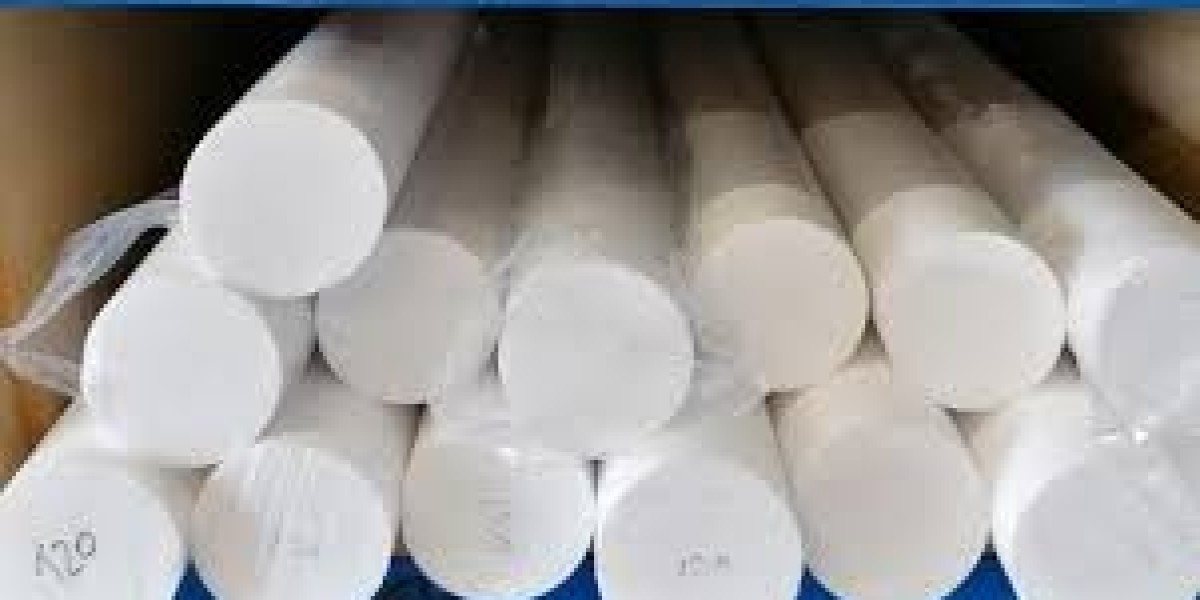

f you’ve ever used a non-stick frying pan or wondered how industrial machines survive extreme chemical environments, you’ve already encountered PTFE, even if you didn’t realize it. PTFE stands for Polytetrafluoroethylene, a high-performance synthetic polymer widely known under the brand name Teflon. It’s not just another plastic—it’s a material that behaves almost like a superhero in the world of engineering.
PTFE is made from carbon and fluorine atoms arranged in a unique molecular structure that gives it exceptional stability and resistance. Its chemical formula is (C₂F₄)n, which forms long chains that are incredibly strong and nearly impossible to break under normal conditions . This is why PTFE is often described as “chemically inert,” meaning it doesn’t react easily with other substances.
What makes PTFE fascinating is its versatility. From aerospace engineering to kitchen cookware, it plays a role in industries that demand reliability under extreme conditions. It’s one of those rare materials that performs equally well in freezing temperatures and intense heat, making it indispensable in modern manufacturing.
Chemical Structure of PTFE
At the microscopic level, PTFE’s structure is what gives it its superpowers. Each carbon atom in the polymer chain is tightly bonded to fluorine atoms, forming one of the strongest chemical bonds known in organic chemistry. This carbon-fluorine bond acts like a shield, protecting the material from chemical attacks, heat, and environmental damage.
The polymer chain forms a helical structure, which adds to its stability and low surface energy. This is why nothing really sticks to PTFE—not even glue or water. It’s like trying to stick tape onto ice; it just slides off.
Another interesting aspect is its high crystallinity, typically between 50% and 90%, which enhances its mechanical and thermal performance . This crystalline structure allows PTFE to maintain its shape and properties even under stress, making it ideal for demanding applications like sealing systems and insulation materials.
Key Properties of PTFE
Thermal Stability
One of the standout features of PTFE is its ability to handle extreme temperatures without breaking down. It can operate continuously at temperatures up to 260°C and has a melting point of around 327°C . That’s hotter than most cooking ovens and even some industrial processes.
What’s even more impressive is its performance in freezing conditions. PTFE remains flexible even at temperatures as low as -200°C, making it suitable for cryogenic applications like liquefied gas storage. Imagine a material that doesn’t become brittle in extreme cold—PTFE felis. does exactly that.
This thermal resilience makes PTFE a go-to material in industries like aerospace, where components are exposed to rapid temperature changes. It ensures safety, reliability, and long-term performance without degradation.
Chemical Resistance
PTFE is practically immune to chemical attacks. It resists acids, bases, solvents, and even highly corrosive substances. In fact, only a few extremely reactive chemicals can affect it, which makes it one of the most chemically stable materials available .
This property is a game-changer for industries dealing with hazardous chemicals. PTFE is commonly used to line pipes, tanks, and reactors, preventing corrosion and contamination. It acts like a protective armor, ensuring that both the equipment and the materials being processed remain safe.
Because of this, PTFE is widely used in pharmaceuticals and food processing, where purity and contamination control are critical. Its inert nature ensures that it doesn’t react with the substances it comes into contact with.
Low Friction & Non-Stick Nature
If PTFE had a personality trait, it would be “slippery.” It has one of the lowest coefficients of friction among all solid materials, typically ranging from 0.05 to 0.10 . That’s why it’s used in non-stick cookware and mechanical components.
This low friction means less wear and tear. Machines run smoother, parts last longer, and energy consumption is reduced. It’s like adding a permanent lubricant that never wears off.
The non-stick property also makes PTFE incredibly useful in industries like food production and packaging. Materials don’t stick to surfaces, which improves efficiency and reduces cleaning time.
Electrical Insulation
PTFE is also an excellent electrical insulator, with a dielectric strength of around 60 kV/mm . This makes it ideal for high-voltage applications where safety is critical.
It’s widely used in cables, circuit boards, and electronic components because it prevents electrical leakage and ensures stable performance. Even in extreme environments, PTFE maintains its insulating properties.
Advantages of PTFE Material
Durability and Longevity
PTFE isn’t just strong—it’s built to last. Its resistance to heat, chemicals, and wear means it can function for years without needing replacement. This durability translates into lower maintenance costs and higher efficiency in industrial settings.
Think of PTFE as a long-term investment. While it may cost more upfront, its longevity often makes it more economical in the long run. Industries rely on this material because downtime and repairs can be far more expensive than the material itself.
Weather and UV Resistance
Unlike many plastics, PTFE doesn’t degrade when exposed to sunlight or harsh weather conditions. It resists UV radiation, ozone, and moisture, making it ideal for outdoor applications .
This is why PTFE is used in roofing materials, outdoor cables, and even architectural structures. It maintains its properties for decades, even in extreme environments.
Limitations of PTFE
Mechanical Weakness
Despite its many strengths, PTFE isn’t perfect. It has relatively low mechanical strength compared to metals and some other plastics. This means it can deform under heavy loads, a phenomenon known as creep .
To overcome this, manufacturers often reinforce PTFE with materials like glass or carbon fibers. This improves its strength while maintaining its unique properties.
Cost Factors
PTFE can be more expensive than standard plastics due to its complex manufacturing process. However, its performance often justifies the cost, especially in high-demand applications.
Common Applications of PTFE
Industrial Uses
Chemical Industry
In chemical plants, PTFE is used for lining pipes, valves, and tanks. Its resistance to corrosion ensures safe handling of aggressive chemicals, reducing maintenance and improving safety.
Aerospace Sector
PTFE is used in aircraft wiring, seals, and gaskets because of its heat resistance and reliability. It plays a crucial role in ensuring the safety and efficiency of aerospace systems .
Consumer Products
Cookware
Non-stick pans are perhaps the most well-known application of PTFE. They make cooking easier and cleaning faster, which is why they’re found in kitchens worldwide.
Textiles
PTFE is also used in waterproof and stain-resistant fabrics. It helps create clothing that repels water while remaining breathable.
PTFE vs Other Materials
| Property | PTFE | Nylon | PVC |
|---|---|---|---|
| Max Temp (°C) | 260 | 120 | 60 |
| Friction | Very Low | Medium | Medium |
| Chemical Resistance | Excellent | Moderate | Moderate |
| Electrical Insulation | ممتاز | Good | Good |
This comparison clearly shows why PTFE stands out in demanding environments.
PTFE in Modern Technology (2026 Trends)
In 2026, PTFE continues to evolve with new applications in electronics, renewable energy, and medical technology. Its role in high-frequency communication systems and clean energy solutions is growing rapidly.
Industries are also developing PTFE composites that enhance strength while maintaining low friction and chemical resistance. These innovations are opening new doors for the material in advanced engineering applications.
Environmental & Safety Aspects
PTFE itself is considered safe and inert during use. However, concerns have been raised about certain chemicals used in its manufacturing process. Modern production methods are addressing these issues by eliminating harmful substances and improving sustainability.
Future of PTFE Material
The future of PTFE looks promising. With ongoing research and technological advancements, its applications are expanding into areas like nanotechnology and advanced coatings.
As industries demand materials that can withstand extreme conditions, PTFE is likely to remain a key player in innovation and development.
Conclusion
PTFE is more than just a plastic—it’s a revolutionary material that has transformed multiple industries. From its unmatched chemical resistance to its incredible thermal stability, it offers a combination of properties that few materials can match.
Whether it’s in your kitchen or in high-tech industrial systems, PTFE continues to prove its value. As technology advances, its role will only grow, making it an essential material for the future.
FAQs
1. What does PTFE stand for?
PTFE stands for Polytetrafluoroethylene, a synthetic polymer known for its non-stick and heat-resistant properties.
2. Is PTFE safe for cooking?
Yes, PTFE-coated cookware is safe when used at recommended temperatures.
3. Why is PTFE non-stick?
Its low surface energy prevents substances from adhering to it.
4. Where is PTFE commonly used?
It’s used in cookware, industrial equipment, electronics, and medical devices.
5. What are the disadvantages of PTFE?
Its main drawbacks are lower mechanical strength and higher cost compared to standard plastics.