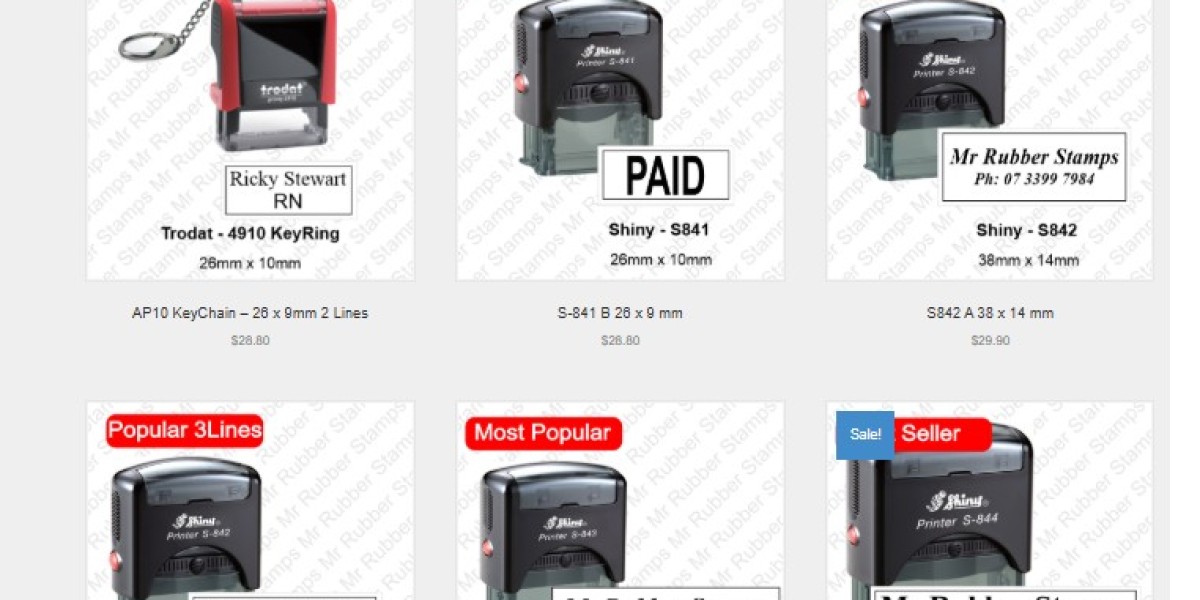

Self Ink Stamps: A Convenient Choice for Everyday Stamping
Rubber stamps remain useful in offices, businesses, schools, warehouses and many other workplaces where documents need to be marked quickly and consistently. Among the available options, Self Ink Stamps are particularly convenient because they combine the stamp and ink pad in one compact unit.
Instead of reaching for a separate ink pad every time a document needs a stamp, a self-inking design automatically re-inks the stamp after each impression. This makes repetitive stamping less time-consuming while helping maintain a neat and consistent result.
What Are Self Ink Stamps?
Self-inking stamps are rubber stamps designed with an internal ink pad. When the stamp is pressed onto a surface, the stamping mechanism moves into position and creates the impression. When released, it returns to its original position and re-inks automatically.
This simple mechanism makes self-inking stamps practical for tasks that require frequent impressions.
They can be used for:
- Business names and addresses
- Office approval or administrative markings
- Packaging and inventory work
- Dates and document processing
- School and organisational administration
- Repetitive paperwork
- Personalised business information
Why Choose a Self-Inking Stamp?
The main advantage of a self-inking stamp is convenience. Since the ink pad is built into the stamp, there is less equipment to handle during everyday use.
Faster Repetitive Stamping
For workplaces that process a large number of documents, small time savings can make routine tasks easier. A self-inking mechanism allows users to stamp repeatedly without manually picking up an ink pad between impressions.
Cleaner and More Convenient
Keeping the ink contained within the stamp can make the stamping process less messy than using a separate pad. It also makes the stamp easy to store in a desk drawer, counter area or stationery cupboard.
Consistent Impressions
A good-quality stamp can provide clear impressions when it is used on suitable surfaces and maintained correctly. Consistent pressure and a clean stamping surface also help produce better results.
Choosing the Right Self-Inking Stamp Size
The ideal stamp size depends on what needs to appear in the impression. A small stamp may be suitable for a short business name, while a larger format can accommodate additional information.
Before ordering a stamp, consider:
- The amount of text required
- Whether a logo needs to be included
- The available space on the document
- How frequently the stamp will be used
- Whether the stamp needs to fit easily in a pocket or desk drawer
Choosing the appropriate size helps ensure that the finished impression is practical rather than overcrowded.
Self-Inking Stamps vs Traditional Rubber Stamps
Both self-inking and traditional rubber stamps have useful applications, but their designs suit different working styles.
A traditional rubber stamp generally requires a separate ink pad. This can be useful when users want greater flexibility with ink colours or already have suitable ink pads available.
Self-inking stamps, on the other hand, are designed for convenience and repeated use. The integrated ink pad makes them especially useful for everyday administrative tasks where speed and simplicity matter.
The right choice ultimately depends on the type of stamping required, the frequency of use and personal preference.
Quality Matters When Buying a Rubber Stamp
A stamp is a small office tool, but the quality of its construction can affect the clarity and reliability of every impression. Poorly produced stamps may result in uneven text, incomplete impressions or unnecessary replacement costs.
It is worth considering the materials and manufacturing process when choosing a rubber stamp supplier.
Mr Rubber Stamps is a privately owned and operated Australian rubber stamp business with 20 years of experience producing and supplying rubber stamps to the Australian market. The business uses Trodat and Colop self-inking and traditional stamp products, providing options across different sizes and applications.
The company also produces its rubber stamps on site through Quick Ezy Stamps, allowing the products to be manufactured locally and backed by its product guarantee.
Common Types of Stamps
Self-inking stamps are just one option available for different stamping requirements. Depending on the task, users may also need traditional rubber stamps, date stamps or common seals.
Date Stamps
Date stamps are useful when documents, forms, records or paperwork need to be marked with a specific date. They can help simplify repetitive administrative processes.
Traditional Stamps
Traditional rubber stamps provide a straightforward option for users who prefer to work with a separate ink pad or require a particular stamping setup.
Common Seals
Common seals can be used where an organisation requires a formal seal for specific documents or administrative purposes.
Selecting the right type of stamp before ordering can prevent problems with size, layout or intended use.
How to Get Better Stamp Impressions
Even a quality stamp needs to be used correctly. A few simple habits can help produce clearer impressions and extend the useful life of the stamp.
- Place the document on a reasonably flat surface.
- Apply steady, even pressure.
- Avoid rocking the stamp during use.
- Keep the stamping surface clean.
- Store the stamp appropriately when it is not being used.
- Replace or refill the ink when the impression begins to fade, where applicable.
These basic practices can make everyday stamping more reliable.
A Practical Solution for Australian Businesses
For businesses that regularly handle paperwork, invoices, forms, packaging or internal records, having the right rubber stamp can make routine tasks more efficient. A self-inking design is particularly useful when a business needs to apply the same information repeatedly throughout the day.
The key is to select a stamp that matches the required text, dimensions and frequency of use rather than simply choosing the largest or smallest available option.
Frequently Asked Questions
1. What are Self Ink Stamps used for?
Self Ink Stamps can be used for business names, addresses, administrative markings, dates, packaging, paperwork and other situations where the same information needs to be stamped repeatedly.
2. Do self-inking stamps need a separate ink pad?
No. Self-inking stamps have an internal ink pad that automatically re-inks the stamp after it is used, which makes them convenient for repeated stamping.
3. Are self-inking stamps suitable for business use?
Yes. They can be particularly practical for businesses that frequently stamp documents, forms, packaging or other materials with consistent information.
4. How do I choose the right stamp size?
Consider the amount of information that needs to appear in the impression, the available space on the document and how the stamp will be used. A supplier can also help determine an appropriate size based on the required design.
5. What other types of rubber stamps are available?
Depending on the application, options can include traditional rubber stamps, self-inking stamps, date stamps and common seals.
For businesses and individuals looking for professionally produced Self Ink Stamps, product information and available options can be found at https://www.mrrubberstamps.com.au/products/self-inking-stamps
With the right size, design and stamping mechanism, a quality rubber stamp can remain a simple but valuable tool for handling everyday paperwork efficiently and consistently.