
Finding the best moisturizer for acne-prone skin can be challenging. Many people with acne worry that moisturizing will make their skin more oily, clog pores, or cause additional breakouts. Because of this, moisturizer is often one of the first products people remove from their skincare routine.
But acne-prone skin still needs hydration.
Whether your skin is oily, dry, combination, or sensitive, maintaining adequate moisture can help keep your skincare routine comfortable and support the skin barrier. The key is choosing a moisturizer that matches your skin type and works well with the other products you use.
A suitable moisturizer should provide hydration without leaving your skin feeling excessively greasy or heavy. It should also fit naturally into your daily routine rather than adding unnecessary complexity.
In this complete guide, we will explain what makes a moisturizer suitable for acne-prone skin, which ingredients to look for, what to avoid, how to choose according to your skin type, and how to use moisturizer as part of an effective skincare routine.
Why Is Moisturizer Important for Acne-Prone Skin?
Acne-prone skin is often associated with excess oil, but oiliness does not mean that the skin does not need hydration.
Your skin can produce excess sebum while still becoming dehydrated. Cleansing, exfoliation, acne treatments, environmental conditions, and weather can all contribute to dryness or discomfort.
When the skin becomes excessively dry, it may feel tight, rough, flaky, or irritated. This can make it more difficult to maintain a consistent skincare routine.
A moisturizer helps provide hydration and supports the skin barrier. It can also help make an acne-focused skincare routine more comfortable.
However, moisturizer should not be viewed as a replacement for acne treatment. Its primary role is to provide hydration and support the skin while other appropriate acne-care steps address breakouts.
What Makes the Best Moisturizer for Acne-Prone Skin?
There is no single moisturizer that is perfect for everyone. The ideal product depends on your skin type, concerns, climate, and existing skincare routine.
However, several characteristics are worth considering when comparing moisturizers.
Lightweight and Comfortable Texture
People with oily or combination skin may prefer lightweight textures such as gels, lotions, or gel-creams.
These formulas can provide hydration without leaving a thick or greasy feeling.
However, lightweight does not automatically mean better. If your skin is dehydrated, you may need a richer formula.
The best moisturizer is one that provides enough hydration while remaining comfortable on your skin.
Non-Comedogenic Formulation
People with acne often look for a non-comedogenic moisturiser.
Non-comedogenic products are generally formulated with a lower likelihood of contributing to clogged pores. This can make them an attractive option for people who experience blackheads, whiteheads, or congestion.
However, non-comedogenic does not mean that a product is guaranteed to work for every person.
Individual skin can react differently to the same ingredients. Therefore, it is still important to monitor your skin after introducing a new product.
Adequate Hydration
A moisturizer should actually provide sufficient hydration for your skin type.
Depending on the formulation, moisturizing ingredients may include glycerin, hyaluronic acid, panthenol, ceramides, and other hydrating or skin-conditioning ingredients.
If your skin feels tight shortly after applying moisturizer, the product may not be providing enough hydration or may not be the right match for your skin.
Best Moisturizer for Different Acne-Prone Skin Types
Your skin type is one of the most important factors to consider.
For Oily Acne-Prone Skin
Oily skin tends to produce more sebum, which can result in a shiny appearance and may contribute to clogged pores.
If you have oily acne-prone skin, you may prefer a lightweight moisturizer that absorbs comfortably without leaving a heavy finish.
Gel-based or lightweight lotion textures can be practical choices.
However, avoid the mistake of completely skipping moisturizer. Oily skin still requires hydration.
For Dry Acne-Prone Skin
Acne and dryness can occur at the same time.
If your skin feels tight, flaky, rough, or uncomfortable while you are experiencing breakouts, you may need a moisturizer that provides more substantial hydration.
A richer cream may be more appropriate than an extremely lightweight gel.
It is also worth reviewing the rest of your skincare routine. Cleansers and acne treatments can sometimes contribute to dryness, particularly when several active products are used together.
For Combination Acne-Prone Skin
Combination skin has both oily and dry areas.
The T-zone—typically the forehead, nose, and chin—may become oily, while the cheeks may feel normal or dry.
A balanced moisturizer can help provide hydration without making the oilier areas feel excessively heavy.
You can also adjust how much moisturizer you apply to different areas depending on your skin's needs.
For Sensitive Acne-Prone Skin
Sensitive skin requires additional consideration.
If your skin is easily irritated, look for a simple formulation and avoid introducing multiple new products at once.
Pay attention to symptoms such as:
Burning
Stinging
Redness
Itching
Excessive dryness
Persistent irritation
If a moisturizer causes a significant reaction, discontinue use and consider seeking professional advice.
Ingredients to Look for in an Acne-Friendly Moisturizer
The ingredient list can help you understand what a moisturizer is designed to do.
Glycerin
Glycerin is a commonly used humectant that helps attract and retain water in the skin.
It is frequently found in moisturizers because it can provide hydration without necessarily creating a heavy texture.
Hyaluronic Acid
Hyaluronic acid is another popular hydrating ingredient.
It helps attract water and is commonly used in lightweight moisturizing formulas.
Ceramides
Ceramides are lipids naturally found in the skin barrier.
They are commonly included in moisturizers designed to support barrier function and hydration.
Panthenol
Panthenol is used in skincare formulations for its moisturizing and skin-conditioning properties.
It can be particularly useful in formulas designed to provide comfortable hydration.
Niacinamide
Niacinamide is a form of vitamin B3 commonly used in skincare.
Depending on its concentration and formulation, it may help support the appearance and function of the skin barrier while also being used in products designed for oily and blemish-prone skin.
What Ingredients or Formulations Should You Avoid?
There is no universal ingredient blacklist for acne-prone skin. What works for one person may not work for another.
However, some product characteristics may be worth approaching carefully.
Very Heavy Formulas
If your skin is extremely oily, very heavy creams may feel uncomfortable.
This does not mean rich moisturizers are automatically bad for acne-prone skin. Dry acne-prone skin may actually benefit from richer hydration.
Choose according to your skin type rather than assuming that every acne-prone person needs the same texture.
Excessive Fragrance
Fragrance is not necessarily problematic for everyone, but heavily fragranced products may be less suitable for people with sensitive or easily irritated skin.
If your skin frequently reacts to skincare products, a simpler formulation may be preferable.
Too Many Active Ingredients
Some moisturizers contain multiple active ingredients.
While this can be useful in certain formulations, combining too many active skincare products can make a routine unnecessarily complicated.
If you already use acne treatments, serums, exfoliants, or other active products, consider whether you really need additional actives in your moisturizer.
Is an Oil-Free Moisturizer Better for Acne?
Oil-free moisturizers are often popular among people with oily and acne-prone skin.
They may provide a lighter feel and can be particularly comfortable in hot or humid conditions.
However, "oil-free" does not automatically mean "better."
The complete formulation matters more than one characteristic. A well-formulated moisturizer containing certain emollient ingredients may still work well for some people with acne-prone skin.
Instead of choosing a product solely because it is oil-free, consider its texture, ingredients, and how your skin responds to it.
Can Moisturizer Cause Acne?
A moisturizer can be unsuitable for an individual, but this does not mean moisturizer itself causes acne.
Breakouts can have many contributing factors, including hormones, genetics, excess sebum, clogged pores, skincare products, and environmental influences.
If you notice repeated congestion after introducing a particular moisturizer, stop using it and observe how your skin responds.
Introducing one new product at a time can make it easier to identify products that may not agree with your skin.
How to Use Moisturizer in an Acne Skincare Routine
A simple routine can make it easier to maintain consistent skincare.
Morning Routine
A basic morning routine may include:
Gentle cleanser
Acne treatment, if appropriate
Moisturizer
Sunscreen
Evening Routine
An evening routine may include:
Gentle cleanser
Acne treatment, if appropriate
Moisturizer
The exact routine can vary depending on your skin and the products you use.
If you are using prescription acne medication or strong active ingredients, follow the instructions provided by your dermatologist or healthcare professional.
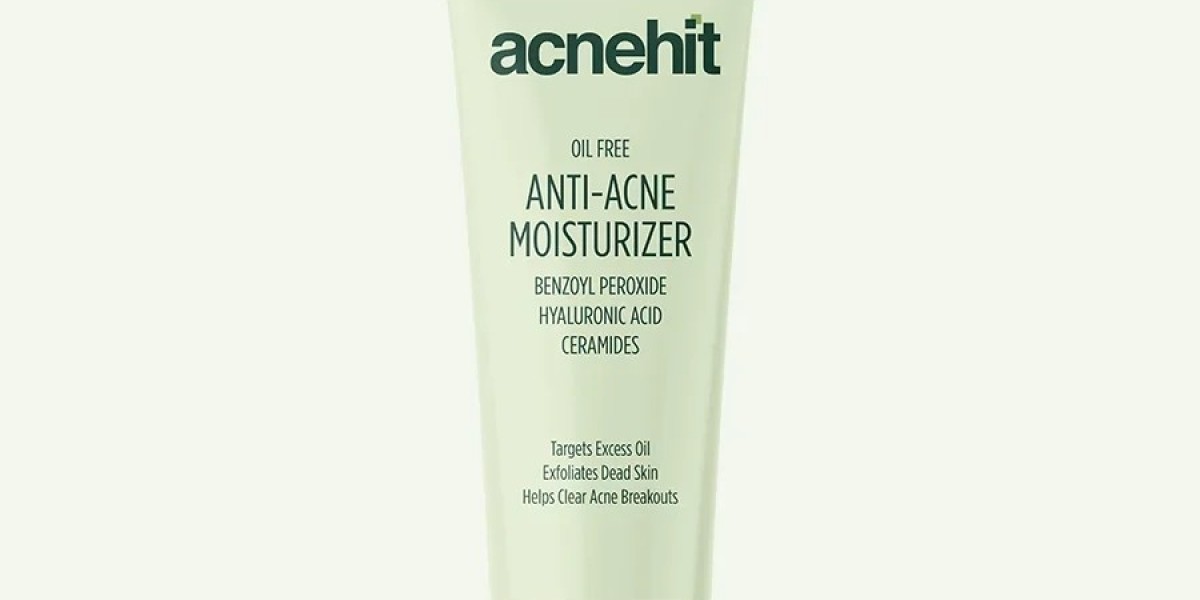
Acnehit Anti-Acne Moisturizer
Acnehit's Anti-Acne Moisturizer is designed to be considered as part of an acne-focused skincare routine.
When choosing an anti-acne moisturizer , it is important to consider how the product fits your individual skin type and routine rather than relying only on its name or marketing claims.
For oily skin, you may prefer a lightweight texture, while dry acne-prone skin may require more substantial hydration.
The right moisturizer should complement your skincare routine and provide comfortable hydration without making the routine unnecessarily complicated.
How Much Moisturizer Should You Apply?
Using more moisturizer does not necessarily mean better hydration.
Start with a moderate amount and apply an even layer across your face.
If your skin still feels dry, you may need slightly more. If your skin feels excessively greasy or heavy, you may be applying too much or using a formula that is not ideal for your skin type.
Your ideal amount can also change depending on the season.
You may prefer a lighter amount or texture during hot weather and more hydration during colder or drier conditions.
How to Introduce a New Moisturizer
When trying a new moisturizer, avoid changing your entire skincare routine at the same time.
Instead:
Introduce one new product.
Keep the rest of your routine relatively consistent.
Start with a reasonable amount.
Observe your skin's response.
Stop using the product if significant irritation occurs.
Watch for changes in oiliness, dryness, redness, irritation, and congestion.
This approach can make it easier to determine whether the moisturizer is suitable for your skin.
Common Mistakes to Avoid
Skipping Moisturizer Because You Have Acne
Acne-prone skin can still become dehydrated.
Instead of completely skipping moisturizer, choose a formula appropriate for your skin type.
Using a Very Heavy Product on Oily Skin
If you have oily skin, a thick formula may feel uncomfortable.
Consider a lightweight texture instead.
Using Too Many Acne Products
Adding multiple active ingredients to your routine can increase the chance of irritation.
Keep your routine simple and introduce active products carefully.
Changing Products Too Often
Constantly switching moisturizers makes it difficult to determine which product is working.
Give your routine consistency unless you experience irritation or another obvious problem.
Ignoring Your Skin Type
A moisturizer that works well for someone with dry skin may not feel right on oily skin.
Always consider your individual needs.
How to Find the Right Moisturizer for Your Routine
Instead of asking only, "What is the best moisturizer for acne-prone skin?", ask a few more specific questions:
Is my skin oily, dry, combination, or sensitive?
Does my skin feel tight or dehydrated after cleansing?
Do I frequently experience clogged pores?
Am I already using acne treatments that can cause dryness?
Do I prefer a gel, lotion, or cream texture?
Answering these questions can help you narrow down the type of moisturizer that is most likely to suit your routine.
The best product is not necessarily the most expensive or the one with the longest ingredient list. It is the one that provides the hydration your skin needs while fitting comfortably into your daily routine.
FAQs
Can people with acne use moisturizer every day?
Yes. Moisturizer can be used daily as part of a balanced skincare routine. Choose a formula that suits your skin type and feels comfortable.
What type of moisturizer is best for oily acne-prone skin?
People with oily acne-prone skin often prefer lightweight gel, lotion, or gel-cream textures. The ideal choice depends on individual skin needs.
Is non-comedogenic moisturizer suitable for acne-prone skin?
A non-comedogenic formula may be a useful option for people concerned about clogged pores. However, individual reactions can vary.
Should I use moisturizer if my skin is already oily?
Yes. Oily skin can still become dehydrated. A lightweight moisturizer can provide hydration without necessarily feeling heavy.
Can dry skin also have acne?
Yes. Acne can occur alongside dehydrated skin. In such cases, choosing an appropriate moisturizer is particularly important for maintaining comfort and hydration.
Final Thoughts
The best moisturizer for acne-prone skin is not necessarily the product with the strongest acne claims or the most ingredients. It is a moisturizer that provides appropriate hydration, suits your skin type, and works comfortably with the rest of your skincare routine.
Look for a suitable texture, consider non-comedogenic formulations if clogged pores are a concern, and choose ingredients that support hydration and the skin barrier.
At the same time, avoid overcomplicating your routine with too many products or assuming that oily acne-prone skin should never be moisturized.
Acnehit's Anti-Acne Moisturizer can be one option to consider when building a consistent acne-focused skincare routine. Ultimately, the right moisturizer is the one your skin tolerates well and that helps you maintain a simple, comfortable, and consistent approach to skincare.