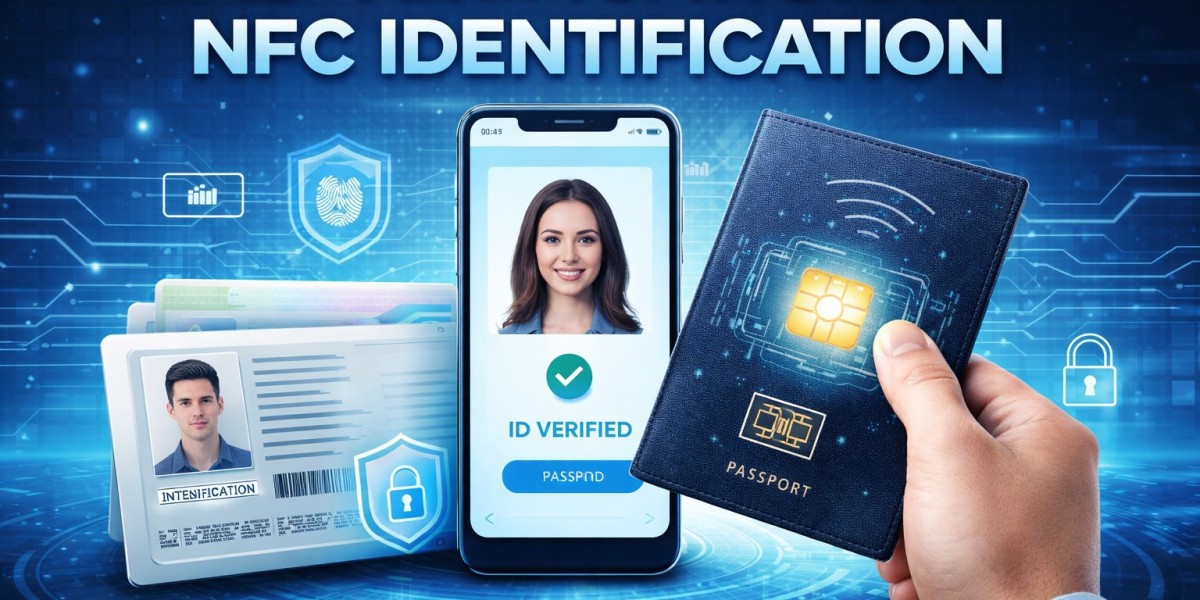

As digital services continue to expand, businesses need reliable ways to verify users while keeping authentication fast and convenient. NFC identity verification and biometric voice recognition are two technologies helping organizations build stronger digital identity workflows. NFC can validate information stored in compatible identity documents, while voice biometrics can verify a person through distinctive characteristics of their voice.
What Is NFC Identity Verification?
NFC identity verification uses Near Field Communication (NFC) to read information stored in the secure chip of compatible passports, ID cards, and other identity documents. A smartphone or NFC-enabled reader communicates with the chip and retrieves data that can be checked for authenticity and consistency. In many workflows, the document information can also be compared with a user's biometric information for an additional layer of verification.
Unlike simply uploading a photograph of an identity document, NFC verification can access chip-based information and cryptographic data. This makes it a valuable component of modern KYC, customer onboarding, fraud prevention, and digital identity verification processes.
What Is Biometric Voice Recognition?
Biometric voice recognition, also called voice biometrics or speaker recognition, analyzes distinctive characteristics of an individual's voice to verify their identity. A system can create a mathematical representation, often called a voiceprint, and compare a new voice sample with the enrolled profile.
Voice recognition can be particularly useful in contact centers, banking applications, telecom services, and other environments where customers already communicate through voice. The UK National Cyber Security Centre notes that call centers are a natural use case because the communication channel already captures voice information.
Combining NFC and Voice Biometrics
Using NFC identity verification and biometric voice recognition together can create a multi-layered identity verification process. NFC can help establish confidence in the authenticity of an identity document, while voice biometrics can provide another signal for verifying the person interacting with the service.
For example, during digital onboarding, a customer may scan a compatible identity document using NFC and then provide a short voice sample. The platform can process both verification signals before completing the identity decision. This approach can reduce dependence on passwords and manual document checks while supporting smoother digital experiences.
Benefits for Modern Businesses
Organizations can use these technologies to support secure customer onboarding, KYC verification, account authentication, fraud prevention, and access control. NFC can provide a convenient contactless document verification method, while voice recognition can add biometric authentication to voice-based interactions.
However, biometric systems should be designed with appropriate security, privacy, consent, and anti-spoofing controls. NCSC guidance emphasizes the importance of understanding how biometric systems can be attacked and selecting technologies according to the intended security requirements.
Conclusion
NFC identity verification and biometric voice recognition represent complementary approaches to modern digital authentication. By combining trusted document data with biometric signals, organizations can create identity workflows that are more secure, convenient, and suitable for digital-first services.
For businesses developing digital KYC and identity verification solutions, integrating NFC and voice biometrics can provide additional verification capabilities while delivering a smoother customer experience.