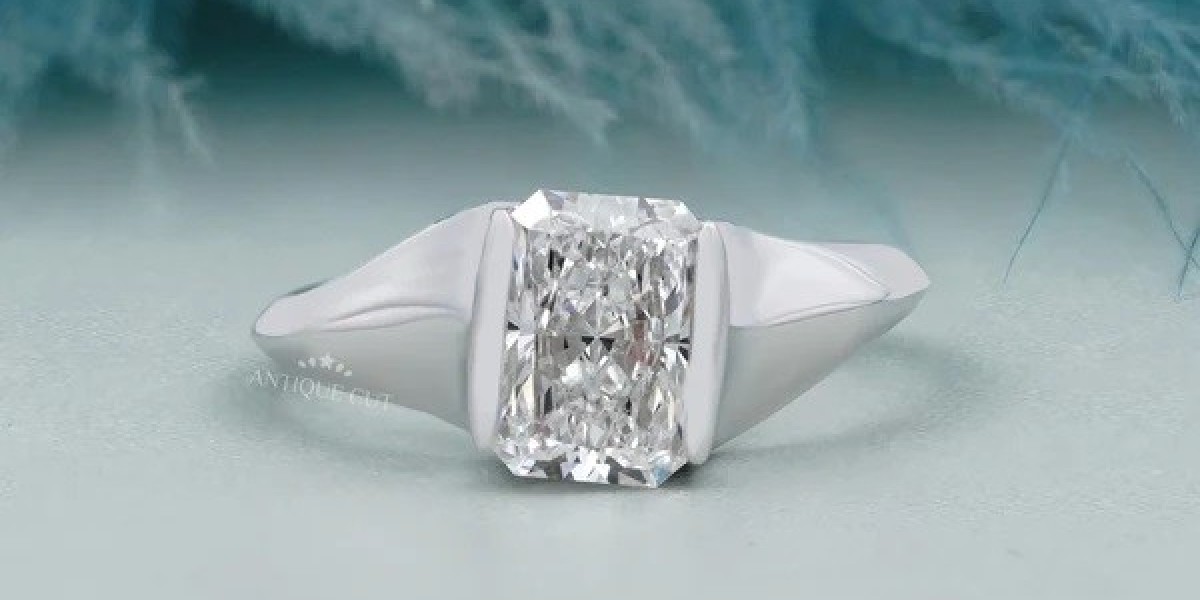

An engagement ring has two jobs to do at the same time. It should have a design that appeals to the wearer, but it should also be comfortable and practical enough to become part of everyday life. Finding that balance can be more difficult than simply choosing a diamond shape or a metal color. Every component, from the center stone to the way it is secured, contributes to how the finished ring looks and performs.
The radiant cut is an interesting choice for this reason. Its outline combines straight sides with clipped corners, while its faceting gives the center stone a lively appearance. It can be cut in proportions that range from nearly square to distinctly elongated, giving buyers different options when deciding how they want the ring to look on the hand.
A bezel setting introduces a different approach to securing the center stone. Instead of relying on individual prongs positioned around the diamond, a metal rim follows the outer edge of the stone. This creates a defined frame and makes the setting an important part of the ring's appearance.
When these two elements are brought together, the result is a design where form and function are closely connected. The radiant shape establishes the visual identity, while the bezel contributes structure, framing, and a particular profile. Understanding how these details interact can make it easier to determine whether this style suits your preferences.
The Radiant Cut Gives the Ring a Distinctive Foundation
The center diamond usually receives most of the attention when someone first looks at an engagement ring. With a radiant cut, there are several characteristics worth examining beyond its name. Radiant diamonds typically have four straight sides with corners that are cut away rather than left pointed. This gives the stone a recognizable outline that sits somewhere between traditional rectangular and square shapes, depending on its proportions.
The length-to-width ratio is particularly important. A radiant with a shorter ratio may appear relatively square, while a longer stone can create a more extended line across the finger. The choice is largely a matter of personal preference. Someone who likes a more compact center may prefer a squarer radiant, while someone who wants the stone to create additional length may lean toward an elongated version.
The faceting is another defining characteristic. Radiant cuts use numerous facets across the stone, creating a pattern that differs from step-cut shapes such as emerald or Asscher cuts. When viewed from above, the diamond can have a lively visual character while maintaining its crisp outer geometry. These characteristics give the radiant cut a strong foundation for different setting styles.
The relationship between the stone and its frame can therefore affect the overall appearance. If the bezel is proportioned appropriately, it can emphasize the radiant's clipped corners and straight sides rather than hiding them. This is one reason the center diamond should be considered together with the setting. Looking at the stone independently may not provide a complete idea of how it will appear once surrounded by metal.
Personal comfort and styling choices differ for everyone, making it essential to view a mounting as an active design element rather than a static frame. As buyers discover bezel set radiant cut engagement ring options, evaluating how low-profile protective rims, side clearance, and gallery height work together reveals how deeply the setting controls finger placement, stackability, and everyday wearability.
How the Bezel Adds Structure Without Taking Attention Away From the Diamond
A bezel setting changes the way the center diamond connects with the rest of the ring. The metal border surrounds the stone's edge, creating a continuous frame instead of several separate contact points. From a design perspective, this gives the ring a clear outline. The bezel can make the center appear visually contained, with the transition from diamond to metal occurring around the entire perimeter.
The width of the bezel matters. A narrow frame can keep the center diamond as the main focus, while a wider frame makes the surrounding metal more noticeable. Even a small difference in width can influence the balance of the finished ring. The shape of the frame should also follow the diamond accurately. A radiant cut has clipped corners, so the bezel needs to accommodate those angles.
This is where form and function overlap. The bezel is a design feature, but it also serves as part of the stone's mounting structure. Because the metal extends around the perimeter, the setting becomes an integral part of the ring rather than simply a collection of small holding points. For people who are interested in the construction of fine jewelry, this can be an appealing aspect of the design.
The setting has a visible role in shaping the appearance of the entire piece. The setting height is another consideration. Some bezel rings are designed with a lower profile, keeping the center closer to the finger. Others can position the stone higher depending on the construction and desired appearance.
A lower profile may appeal to someone who prefers a ring that feels closely integrated with the hand. A higher setting can provide more separation between the center stone and finger and may offer additional room for certain wedding-band combinations.
Balancing Practicality With Metal and Band Design
An engagement ring is likely to experience more regular use than many other jewelry pieces. For this reason, practical considerations should be part of the selection process rather than an afterthought. The bezel's surrounding metal contributes to the structure of the setting, but the rest of the ring matters too. The band width, inner profile, shoulders, and overall weight can influence how comfortable the ring feels during normal activities.
People who spend a lot of time typing may have different preferences from those who work with their hands. Someone who frequently removes rings for work may prioritize different features than a person who expects to wear the ring throughout most of the day. A ring should sit securely without creating unnecessary pressure around the finger.
Band width also affects the experience. A narrow band can feel lighter and allow the center diamond to dominate the design. A wider band can provide a stronger visual foundation and may appeal to those who prefer substantial jewelry. The choice of metal can then be used to shape the ring's overall appearance.
White gold offers a cool-toned look that can coordinate easily with other white-metal jewelry. Yellow gold creates stronger contrast around the diamond, making the bezel frame more noticeable. Rose gold introduces a warmer tone and can provide a different visual character while keeping the overall design refined.
The right choice depends on the wearer's existing jewelry and personal preferences. If most of your collection consists of yellow-gold pieces, a yellow-gold ring may fit naturally into it. If you regularly combine different metals, there is no need to restrict yourself to one color.
Choosing the Diamond With the Entire Ring in Mind
Once the basic design has been established, the center diamond deserves careful attention. A radiant cut can vary significantly from one stone to another, so comparing specifications can help you understand what you are actually choosing. Carat weight is an obvious starting point, but it should not be the only consideration. As mentioned earlier, the visible dimensions of two diamonds with identical carat weights can differ.
Look at length and width as well as the overall shape. If you prefer a longer radiant, compare stones with proportions that create that appearance. If you prefer something closer to a square, look for a suitable length-to-width relationship. The final decision should also account for the bezel itself. The diamond's dimensions need to work with the setting being considered.
The band then completes the relationship. A ring with a substantial bezel may benefit from a band that provides enough visual support. A more delicate bezel can work with a slimmer band when a lighter appearance is preferred. These relationships are easy to overlook when evaluating individual components separately.
At Antiquecut, radiant diamond designs can be considered with attention to the relationship between the center stone, bezel setting, metal, and overall ring structure. Yet they are what ultimately create the finished ring.
Conclusion
A bezel set radiant cut engagement ring brings together two important aspects of jewelry design: appearance and practical construction. The radiant diamond provides a distinctive foundation through its clipped corners, geometric outline, proportions, and faceting, while the bezel creates a continuous metal frame around the center.
The most suitable design depends on how these elements work together. Consider the diamond's length-to-width ratio, visible dimensions, color, clarity, and certification. Then look at the bezel width, setting height, metal choice, band proportions, and expected use.
It is also worth thinking beyond the engagement ring itself. Your existing jewelry collection, future wedding band, preferred metal colors, and everyday habits can all influence which design feels appropriate.
A thoughtful selection process does not have to be complicated. Start with the qualities you value most, compare the diamond and setting as a complete unit, and pay attention to how the ring feels as well as how it looks. When form and function are considered together, the result can be a piece that feels distinctive while remaining practical for regular wear.