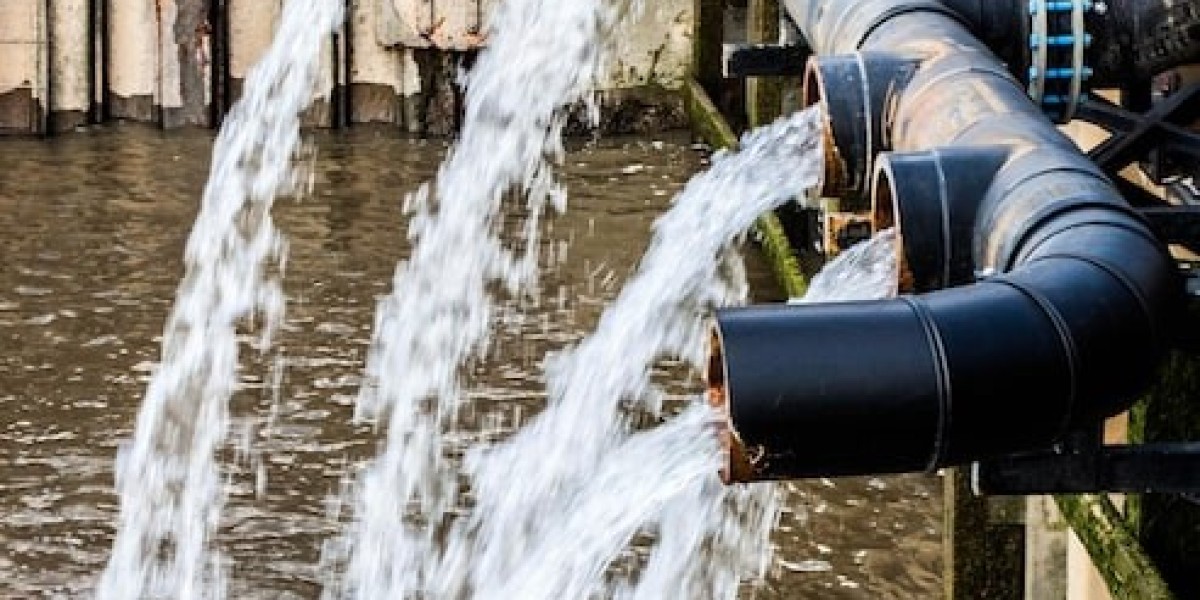

South Korea’s water pump industry is entering a modernization phase shaped by aging distribution networks, water-loss reduction, industrial water requirements, and growing adoption of digital infrastructure. Mature municipal coverage means future demand is increasingly connected with replacement, efficiency upgrades, wastewater recycling, and system optimization rather than basic expansion of water access.
According to the South Korea water pump market analysis published by MarkNtel Advisors, the sector was valued at around USD 1.81 billion in 2025 and is projected to reach USD 2.54 billion by 2032, expanding at a CAGR of 5.14% during 2026–2032. Water and wastewater accounted for around 19.78% of demand in 2025, while food and beverages is projected to grow at approximately 6.8% during 2026–2032.
Aging Pipelines Are Creating Replacement Demand
South Korea has achieved very high tap-water coverage, reaching 99.5% in 2024. However, the maturity of its water network means that infrastructure age is becoming a more important consideration. Around 36%, or approximately 85,000 kilometers, of the country’s water pipelines are more than 20 years old.
Aging infrastructure can contribute to leakage and operating inefficiencies, creating requirements for rehabilitation and replacement. The industry analysis estimates that aging assets contribute to nearly 670 million cubic meters of tap-water leakage, associated with an economic loss of approximately KRW 691.7 billion.
These conditions are shifting investment toward modern pumping stations, pressure-management systems, and equipment capable of operating efficiently within upgraded distribution networks.
Water-Loss Reduction Is Increasing the Role of Smart Systems
South Korea reported a water leakage rate of 9.9% in 2022. Although the country's overall water-service coverage is mature, leakage reduction remains important because losses can increase treatment and distribution costs while placing additional pressure on water resources.
Smart pumps can support this objective by monitoring pressure, flow, and operating conditions in real time. Variable-frequency drives can also allow pump output to respond more closely to network requirements rather than operating continuously at fixed speeds.
The Korea Environment Corporation is involved in environmental infrastructure and water-related management activities in South Korea, reflecting the broader institutional focus on efficient resource management and infrastructure sustainability.
Centrifugal Pumps Remain the Dominant Technology
Centrifugal pumps hold the largest share of South Korea’s water pump industry. Their efficiency, relatively simple construction, and suitability for high-volume, low-to-medium-pressure applications make them widely applicable across municipal water supply, wastewater treatment, industrial utilities, construction drainage, and irrigation.
Their established presence also supports replacement demand. Utilities and industrial operators can modernize older pumping units with more efficient centrifugal systems while retaining much of the surrounding infrastructure.
End-suction, split-case, multistage, vertical, and submersible centrifugal configurations can address different flow, pressure, and installation requirements. The continued expansion of wastewater recycling and industrial process-water systems is expected to support demand for these technologies.
Water and Wastewater Remains a Major Application
Water and wastewater represented approximately 19.78% of South Korea’s water pump industry in 2025. Municipal investment in water supply, sewage networks, wastewater treatment, and infrastructure replacement supports this segment.
Stricter discharge requirements are also increasing the technical requirements of treatment facilities. Advanced nutrient-removal processes can require reliable pumping across intake, treatment, recirculation, and sludge-handling stages.
As treatment facilities modernize, pump specifications increasingly need to account for energy efficiency, corrosion resistance, redundancy, and continuous operation. This creates opportunities for both new installations and retrofit projects.
Industrial Water Requirements Are Expanding
South Korea’s advanced industrial base is creating additional demand for specialized pumping systems. Semiconductor manufacturing is particularly relevant because production processes require ultrapure water and increasingly sophisticated wastewater-reuse systems.
Ultrapure-water applications require pumps capable of maintaining precise flow while minimizing contamination and corrosion risks. Variable-frequency drives can provide additional control over operating conditions and help align pumping performance with process requirements.
Petrochemicals, chemicals, food processing, and other industries similarly require pumps for process water, wastewater, cooling, circulation, and treatment. As industrial facilities expand or modernize, pumping equipment becomes increasingly integrated with automated process-control systems.
Food and Beverage Is Emerging as a High-Growth Segment
The food and beverage segment is projected to expand at approximately 6.8% during 2026–2032, making it an important growth area within the industry. Rising processed-food production, stricter hygiene requirements, and capacity expansion are increasing demand for sanitary and high-purity pumping systems.
Food and beverage facilities require equipment that can handle water, ingredients, cleaning fluids, and process liquids while meeting hygiene and contamination-control requirements. Positive-displacement and specialized centrifugal pumps can serve different applications depending on viscosity, flow characteristics, and sanitation requirements.
This segment illustrates how industrial specialization is creating demand for pumps that offer more than basic fluid movement.
Smart and IoT-Enabled Pumps Are Gaining Ground
The shift toward smart and IoT-connected pumps is one of the most important technology trends identified in the industry analysis. Korean utilities, industrial plants, and large commercial buildings are increasingly adopting systems equipped with sensors, VFDs, and cloud-based monitoring platforms.
These technologies can provide real-time information on flow, pressure, energy use, vibration, and equipment condition. Operators can use this information to identify leaks, optimize pressure, balance pump loads, and detect potential failures before they cause significant downtime.
In industrial environments, connected pumps can also integrate with factory-automation systems, allowing more precise flow control. The combination of lower operating costs, predictive maintenance, and energy optimization is making smart pumping increasingly relevant to both new installations and retrofit projects.
Infrastructure Modernization Is a Major Driver
Government-led infrastructure modernization remains a significant driver of pump demand. The industry analysis identifies programs focused on upgrading water networks, reducing non-revenue water, improving flood resilience, and incorporating digital monitoring.
South Korea’s smart-city initiatives are also increasing the integration of IoT technologies into municipal infrastructure. Smart meters, network monitoring, and digitally managed pumping systems can provide utilities with greater visibility into water distribution and equipment performance.
For pump suppliers, this environment favors equipment that can integrate with broader digital infrastructure rather than operating as standalone mechanical assets.
High Upfront Costs Can Slow Replacement
Despite strong modernization requirements, advanced pumping equipment can carry substantial upfront costs. Pumps incorporating VFDs, smart controls, and corrosion-resistant materials can be more expensive than conventional alternatives.
Supply-chain exposure can add another layer of pressure. The industry analysis notes that manufacturers may rely on imported motors, electronics, and specialty materials, leaving equipment costs vulnerable to global supply disruptions, currency fluctuations, and trade conditions.
As a result, some smaller industrial users and older municipal systems may continue operating inefficient equipment longer than technically desirable. This can delay replacement cycles even when modern pumps could provide energy and maintenance savings.
South Korea Is Moving Toward Digitally Managed Pumping
South Korea’s water pump industry is increasingly defined by infrastructure replacement, industrial water security, energy efficiency, and digitalization. The country’s mature water-service coverage means future development is closely connected with upgrading existing assets rather than simply expanding access.
Centrifugal pumps are expected to remain the leading technology because of their broad applicability and established role across municipal and industrial systems. At the same time, smart controls, VFD integration, IoT monitoring, and specialized pumps for ultrapure water and food processing are expanding the technical scope of demand.
The broader direction points toward pumping infrastructure that is more connected, energy-aware, and responsive to changing operating conditions. As South Korea continues modernizing its water systems and expanding advanced manufacturing, pump technology is becoming increasingly integrated with the country’s wider transition toward efficient and digitally managed infrastructure.