
If you're sourcing components, raw materials, or contract manufacturing capacity for an industrial project, the question you're really asking isn't "does this supplier look good on paper?" It's "what happens to my production line, my compliance record, or my project timeline if this supplier fails me?"
That's the real purpose of vendor due diligence. It's not a formality to satisfy a procurement checklist , it's how you find out, before you sign a contract, whether a supplier can actually deliver what they promise and keep delivering it under pressure.
This guide walks through how to evaluate vendor due diligence and supplier assessment properly: what to check, in what order, and how to avoid the mistakes that let unqualified suppliers slip through.
What Vendor Due Diligence Actually Means
Vendor due diligence is the investigation you carry out to confirm a supplier is financially sound, technically capable, legally compliant, and operationally stable enough to work with. It goes deeper than a standard supplier assessment, which mostly checks whether a vendor meets your technical, quality, and commercial requirements on paper.
A useful way to think about the difference:
Supplier assessment asks: can this vendor meet our spec, quality standard, and delivery schedule?
Vendor due diligence asks: is this a legitimate, stable, well-run business we can safely depend on?
Factory audit is the verification step , going on-site to confirm the paperwork matches reality.
A completed supplier questionnaire is not due diligence. It's the starting point. Many procurement teams stop there and only discover the gaps after a shipment fails inspection or a supplier suddenly closes its doors.
Why This Matters More Than It Used To
Three things have changed the stakes for manufacturers:
Risk doesn't stop at your direct supplier. A component supplier you've vetted thoroughly may itself depend on a raw-material source or sub-contractor you've never assessed. If that hidden link breaks, your production stops , even though your "approved" supplier looks solid.
Buyers are now expected to know their supply chain, not just their supplier. Regulatory and customer expectations increasingly require visibility into where materials actually come from, who processes them, and under what conditions , not just who issues the invoice.
A good supplier today isn't guaranteed to be a good supplier next year. Ownership changes, financial pressure, subcontracting decisions, and quality drift all happen after approval , which is why due diligence has to be an ongoing process, not a one-time gate.
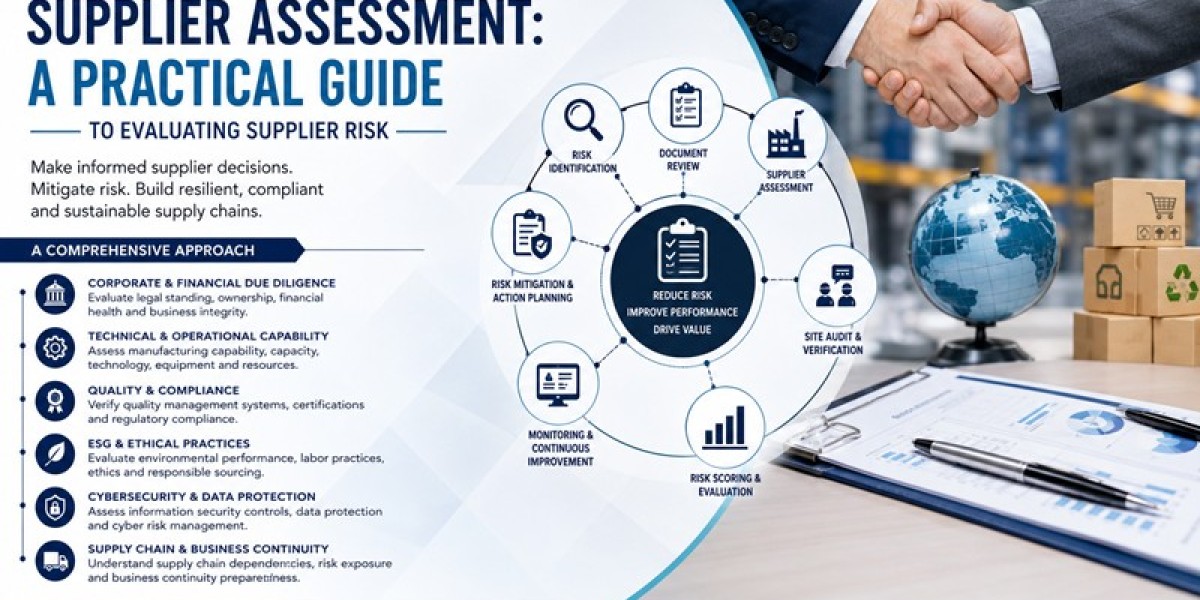
The Risk Areas a Thorough Assessment Should Cover
A supplier can introduce risk in more places than most checklists account for:
Technical , Can they actually manufacture to your specification, not just claim to?
Quality , Is their quality system effective in practice, or just documented on paper?
Capacity , Can they hit your volumes now and scale with you later?
Financial , Are they stable enough to invest in your order and survive a slow quarter?
Regulatory , Do they hold the licenses, permits, and certifications your industry requires?
Operational , Can they sustain output and meet delivery commitments consistently?
Environmental & labor practices , Are working conditions, environmental controls, and ethics acceptable?
Cybersecurity , If they connect to your systems or handle your data and drawings, are they protected?
Sub-tier dependency , Who do they depend on, and have you assessed that layer too?
Reputation , Any history of disputes, violations, or customer complaints worth knowing about?
Treating all ten as equally important for every supplier is itself a mistake , a stationery supplier and a sole-source component manufacturer don't carry the same risk, and shouldn't get the same level of scrutiny.
A Step-by-Step Framework for Evaluating Suppliers
Step 1: Decide How Critical the Supplier Really Is
Before spending time or budget on deep investigation, work out what this supplier actually means to your operation. Is this a commodity item you could re-source in a week, or a safety-critical, sole-source component that would halt production if it failed? This decision shapes everything that follows.
Step 2: Run an Initial Screen
Gather the basics: legal name, ownership, manufacturing locations, years in operation, certifications, key customers, and major subcontractors. This first pass exists to filter out suppliers with obvious red flags , expired certifications, unclear ownership, unverifiable manufacturing claims , before you invest further.
Step 3: Check the Legal and Financial Picture
Confirm legal registration, ownership structure, and any parent-subsidiary relationships
Review litigation history, regulatory actions, and past contract disputes
Assess financial health: revenue trend, debt load, liquidity, and how dependent they are on one or two major customers
A technically excellent supplier with a fragile balance sheet is still a supply-chain risk.
Step 4: Verify Technical and Manufacturing Capability
Don't take capacity claims at face value. There's a real difference between:
Installed capacity → effective capacity → current workload → capacity actually available to you
A supplier advertising a large monthly output figure may already be running near full utilization for other customers, leaving little room for your orders. Ask for evidence , utilization data, shift patterns, equipment lists , not just a number.
Step 5: Assess Quality Systems With Evidence, Not Certificates
A certificate proves conformity to a standard; it doesn't prove the supplier is right for your specific application. Look instead at:
How non-conformances are identified and closed out
Defect rate, rejection rate, and first-pass yield trends
Whether corrective actions actually stick, or the same issues recur
Calibration, traceability, and change-control practices
Step 6: Conduct a Factory Audit for Critical Suppliers
For anything above low-risk, a document review alone isn't enough. An on-site audit checks whether real operations , facility conditions, process controls, inspection practices, warehouse handling , match what's on paper.
Step 7: Score the Risk, But Don't Let a Good Average Hide a Critical Flaw
A weighted scorecard across categories like technical capability, quality, financials, compliance, and supply continuity is useful for comparing suppliers consistently. But a supplier can score well overall and still have one disqualifying issue , a lapsed safety certification, no business continuity plan, or a serious product-safety concern. Build in override rules so a single critical failure can't be masked by a strong average.
Step 8: Approve, Conditionally Approve, or Reject
Not every gap means rejection. Many suppliers can be conditionally approved with a corrective action plan, additional monitoring, or contractual safeguards while they close specific gaps.
Step 9: Monitor , Don't Just Approve and Move On
Supplier qualification is a snapshot; supplier risk is not static. Ownership can change, quality can drift, financial pressure can build quietly. Ongoing monitoring , tracking delivery performance, complaint trends, certification validity, and financial signals , is what turns a one-time approval into a genuinely managed relationship.
Common Mistakes That Undermine Supplier Assessment
Choosing on price alone, without accounting for the downstream cost of quality failures, rework, and delays
Treating certificates as proof of capability, rather than as one data point among many
Only assessing Tier-1 suppliers, while real risk sits further down the chain
Using one checklist for every supplier, regardless of how critical they actually are
Skipping financial review, until a supplier's cash-flow problems become your production problem
Never verifying subcontracting, so critical processes get quietly outsourced without your knowledge
Stopping at approval, with no system to catch problems that develop after onboarding
Red Flags Worth Investigating Further
Certain signals should prompt a deeper look before you proceed:
Ownership that's unclear, inconsistent, or has changed hands recently
Capacity claims with no supporting evidence
Repeated customer complaints or unresolved corrective actions
Expired licenses or unexplained gaps in compliance records
Heavy reliance on a single customer, site, or raw-material source
No documented business continuity or backup-supplier plan
Any one of these doesn't automatically disqualify a supplier , but it should raise the level of scrutiny before you commit.
How IMARC Engineering Can Help
Running a thorough vendor due diligence process in-house takes time, technical judgment, and access most procurement teams don't have on hand , especially when it involves physically verifying a supplier's manufacturing floor, cross-checking capacity claims, or assessing quality systems against your specific process requirements.
IMARC Engineering supports manufacturing and industrial clients through this exact process: independent supplier and vendor technical assessments, factory audits, manufacturing capability verification, quality system evaluation, and structured risk scoring tailored to how critical each supplier actually is to your operation. Rather than relying on supplier-submitted paperwork, our team validates claims on-site and translates findings into a clear approve, conditionally approve, or reject recommendation , backed by evidence your team can act on with confidence.
Speak With An Expert: https://www.imarcengineering.com/contact?service=vendor-audits-and-compliance-checks
Conclusion
Vendor due diligence works best when it's treated as a genuine risk assessment, not paperwork collection. The goal isn't to accumulate certificates , it's to know, with evidence, whether a supplier can perform, stay compliant, remain financially and operationally stable, and keep doing all three after you've signed the contract. Matching the depth of your assessment to how critical each supplier is, verifying claims rather than accepting them, and monitoring suppliers continuously after approval are what separate a resilient supply chain from one waiting to be tested by its next disruption.
Contact Us:
IMARC Engineering
Phone: +91-120-433-0800
Email: sales@imarcengineering.com
India: C-130, Sector 2, Noida, Uttar Pradesh 201301
LinkedIn: https://www.linkedin.com/showcase/imarc-engineering/