
The workplace break room has changed from a basic utility into an important part of the employee experience. Businesses are looking for practical ways to provide convenient food and beverages while accommodating different schedules, preferences, and working environments.
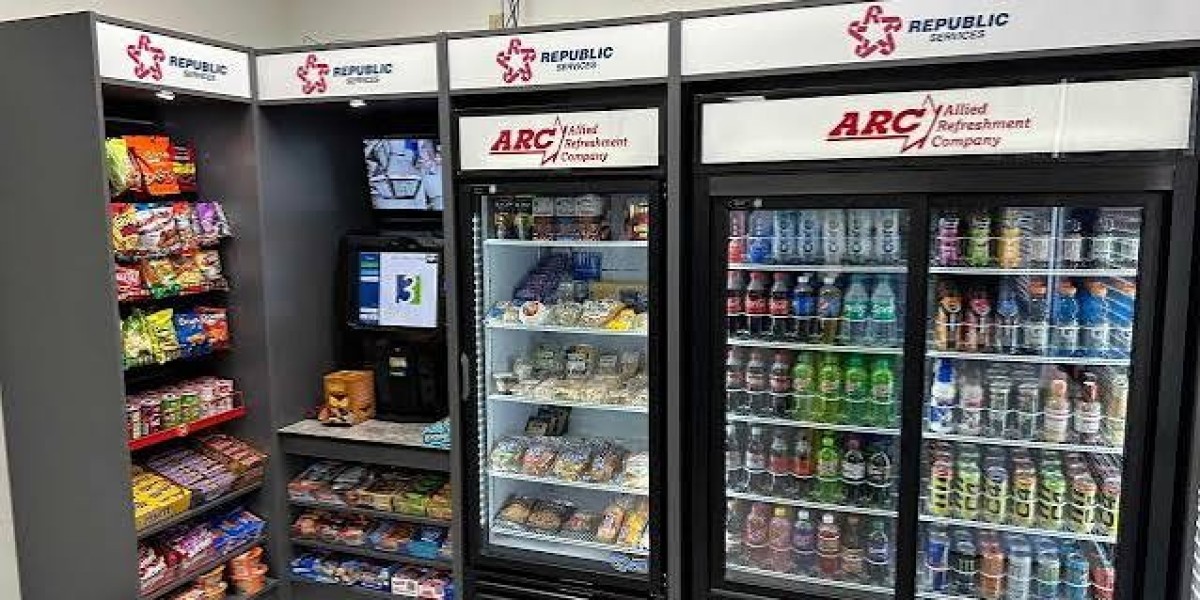
Traditional vending machines still have a place in many workplaces, but they are no longer the only option. Micro markets offer a broader, self-service approach that combines refrigerated displays, shelving, fresh food, snacks, beverages, and cashless checkout in one accessible space.
As businesses rethink workplace amenities, this format is becoming increasingly attractive because it provides more flexibility without requiring a full-service cafeteria.
What Makes a Micro Market Different?
A traditional vending machine limits employees to the products that fit inside the machine. A micro market removes much of that restriction by creating an open retail-style environment.
Employees can walk through the market, browse different products, and select what they want before paying through a self-checkout system.
A typical market may include:
- Fresh sandwiches and salads
- Prepared meals
- Breakfast foods
- Fruit and yogurt
- Packaged snacks
- Protein bars and nuts
- Bottled water and other beverages
- Coffee and tea
- Traditional snacks and treats
This broader format gives businesses more opportunities to create a food selection that reflects the actual needs of their workforce.
Convenience Is Driving Demand
One of the strongest reasons businesses are adopting micro markets is simple: employees are busy.
Leaving the workplace for a snack or lunch can involve driving, parking, waiting in line, and returning to the office. For employees with short breaks or demanding schedules, those extra steps can make food access inconvenient.
A workplace market puts refreshments directly where employees already spend their day.
Someone can grab breakfast before starting a shift, purchase lunch between meetings, or pick up an afternoon snack without leaving the building. For businesses with multiple shifts, the flexibility can be even more valuable.
A Better Fit for Multiple Work Schedules
Not every employee eats at noon.
Offices, manufacturing facilities, warehouses, healthcare organizations, and other workplaces may have employees arriving early, working late, or operating around the clock.
A staffed cafeteria can be difficult to operate across every schedule. A self-service market provides an alternative by allowing employees to purchase available food and beverages without relying on traditional cafeteria hours.
This makes the break room more useful to employees whose schedules do not fit the standard workday.
More Variety Than Conventional Vending
Product variety is another major advantage.
Vending machines are designed for efficiency, but their limited capacity makes it difficult to offer extensive choices. A business may need several machines to provide the same range of products that can be displayed in a properly designed market.
With shelves and refrigerated cases, a micro market can accommodate more categories at once.
That can include lighter snacks, fresh meals, familiar comfort foods, and beverages with different flavors or nutritional profiles. Employees are therefore more likely to find something that fits their preferences rather than having to settle for the few options available in a machine.
Healthier Choices Can Be Easier to Offer
Employees increasingly want access to a range of food options rather than a break room dominated by candy, chips, and sugary drinks.
Micro markets make it easier to include products such as fresh fruit, yogurt, salads, whole-grain snacks, nuts, and lower-sugar beverages alongside traditional favorites.
The goal does not need to be eliminating indulgent foods. Instead, businesses can provide variety and let employees decide what works for them.
For businesses looking to create a more balanced food environment, Harvard's Healthy Eating Plate provides a useful framework for considering how different food groups can fit into everyday meals.
Technology Simplifies the Purchasing Process
Modern micro markets rely heavily on self-service technology.
Instead of requiring a cashier, employees can select their products and complete purchases through a checkout kiosk. Cashless payment options can make transactions faster and more convenient.
Technology can also help service providers manage the market itself. Sales information can reveal which products are popular, which items are moving slowly, and when certain products need to be replenished.
That creates an opportunity for continuous improvement. Rather than keeping the same product mix indefinitely, operators can make changes based on actual employee purchasing behavior.
The Workplace Break Room Becomes More Useful
A micro market can change the role of the break room.
Instead of being primarily a place to heat food brought from home, the space can become a convenient destination for meals, snacks, drinks, and short breaks.
That can have an effect on how employees interact with the workplace. A comfortable refreshment area may encourage employees to step away from their desks or work areas, eat in a shared environment, and have informal conversations with colleagues.
The food itself is only part of the experience. Cleanliness, seating, lighting, layout, and accessibility all influence whether employees actually want to use the space.
Why Businesses Are Looking Beyond Basic Vending
Traditional vending remains useful because it is compact, relatively simple, and suitable for workplaces with modest refreshment needs.
However, larger businesses may find that a vending-only approach does not provide enough flexibility.
A company with hundreds of employees, multiple shifts, or limited nearby food options may benefit from having a larger assortment available on-site. In these situations, micro market services can provide a middle ground between basic vending and the cost and complexity of operating a full cafeteria.
The format can deliver a broader selection without requiring a traditional restaurant-style operation.
Product Selection Can Evolve With Employee Preferences
A successful workplace market should not remain static.
Employees' preferences can change based on seasons, schedules, workplace demographics, and other factors. A product that sells well during one period may perform poorly later.
Regularly reviewing purchasing patterns can help providers make more informed decisions.
Businesses can also collect direct feedback through employee surveys or suggestion systems. Combining sales data with employee input creates a stronger basis for deciding which products to add, remove, or replace.
This approach can reduce waste while keeping the market relevant.
Food Safety and Fresh Inventory Matter
Fresh food creates additional responsibilities that businesses should consider when evaluating a market provider.
Sandwiches, salads, dairy products, and prepared meals require appropriate storage, temperature control, product rotation, and date management. Providers should have clear processes for keeping refrigerated items safe and removing products when necessary.
The U.S. Department of Agriculture's Food Safety and Inspection Service offers practical guidance on safe food handling and storage that can help businesses understand the considerations involved with perishable workplace food.
A reliable service provider should also have an established replenishment schedule based on actual demand.
Micro Markets Can Support Employee Choice
Workplaces contain people with different routines and priorities. Some employees want a quick snack, others need a complete meal, and some may prioritize specific dietary preferences.
A flexible market allows the refreshment program to accommodate more of those needs within one space.
This is particularly useful when employees have limited opportunities to leave the workplace. Instead of choosing from a small number of products, they can browse a larger assortment and decide what makes sense for them.
That sense of choice can make a workplace amenity feel more valuable.
What Businesses Should Evaluate Before Installing One
The popularity of micro markets does not mean every workplace should automatically install one. Businesses should assess whether the format fits their circumstances.
Important factors include:
Employee population: A larger workforce generally creates more potential demand.
Available space: Markets need room for displays, refrigeration, checkout equipment, and employee movement.
Work schedules: Multiple shifts can increase the value of self-service food access.
Nearby food options: A market can be particularly useful when restaurants and convenience stores are difficult to reach.
Product demand: Employee preferences should influence the initial and ongoing selection.
Service quality: Restocking, maintenance, cleaning, and inventory management are essential to keeping the market useful.
Payment technology: Employees should have convenient and familiar ways to pay.
Fresh food management: Perishable products require more careful inventory control than packaged snacks.
The Role of the Service Provider
The equipment may be what employees see, but the service behind it determines much of the day-to-day experience.
Businesses should ask potential providers how often they visit the location, how they monitor inventory, how quickly they respond to equipment problems, and how they adjust product selections.
It is also useful to understand how employee feedback is incorporated into the program.
A market with attractive displays and modern technology will not perform well if popular products are consistently unavailable or maintenance problems remain unresolved.
A Practical Alternative to a Full Cafeteria
For many organizations, the appeal of a micro market comes from its position between traditional vending and a staffed cafeteria.
It can provide more variety and a stronger retail experience than a few vending machines while avoiding some of the operational requirements associated with running a full food-service facility.
That makes the concept particularly appealing to businesses that want to improve workplace refreshments without creating an entirely new cafeteria operation.
The Future of Workplace Refreshments
The growing interest in micro markets reflects a broader shift in how businesses think about employee amenities. Convenience, flexibility, variety, and accessibility are becoming increasingly important components of the workplace environment.
Micro markets are not a universal replacement for vending machines or cafeterias. Their value depends on employee demand, available space, operating schedules, and the quality of the service provided.
But when the format matches the workplace, it can offer a practical combination of fresh food, snacks, beverages, technology, and employee choice.
Ultimately, the popularity of micro markets comes down to their ability to make something simple—getting food and drinks during the workday—more convenient and more adaptable to the people who use the workplace every day.