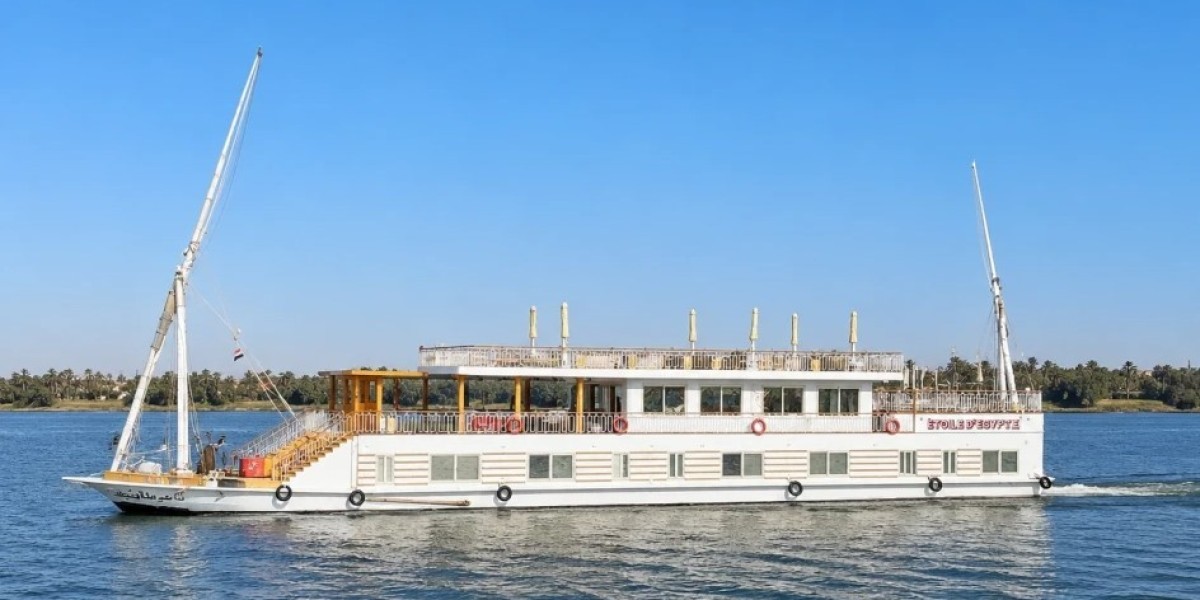

Sailing boats carried people, food, stone, and other goods between settlements along the river. A modern dahabiya allows travellers to experience part of this heritage while enjoying comfortable accommodation and guided cultural visits.
The character of a dahabiya
A dahabiya is recognised by its shallow design, large sails, and smaller passenger capacity. Unlike a conventional river ship, it depends partly on wind, although assistance may be used when sailing conditions are unsuitable.
Modern boats combine traditional styling with private cabins, bathrooms, dining areas, and open decks. Facilities vary, so travellers should request current photographs of the exact vessel before booking.
The smaller size creates a quiet atmosphere and may allow the boat to use mooring places unavailable to larger ships.
Moving at a slower pace
A dahabiya does not attempt to recreate the speed of modern transportation. The slower journey is part of its appeal.
Passengers can spend time on deck watching farmland, villages, palm trees, islands, fishing boats, and desert hills. These views show how the Nile connects historic sites with modern communities.
Daily schedules generally combine sailing with guided excursions. A morning temple visit may be followed by lunch and several peaceful hours on the water.
Exploring the river’s history
Most itineraries operate between Luxor and Aswan. Planned stops may include temples, archaeological remains, markets, islands, and riverside communities.
Travelling by water helps visitors understand why ancient settlements developed close to the Nile. The river supported agriculture, trade, transportation, and communication throughout Egyptian history.
A guide can explain this relationship during excursions. Ask whether guiding services, entrance tickets, and transportation are included in the package.
Accepting natural conditions
Traditional sailing requires flexibility. Wind, river traffic, navigation rules, local permissions, and attraction schedules may affect the speed and order of the programme.
A support vessel can assist when needed, but the published itinerary should still be treated as an intended schedule rather than a guarantee of exact arrival times.
Travellers should confirm how the operator handles a significant change and whether essential attractions are expected to remain included.
Choosing the right vessel
Review the boat’s passenger capacity, cabin layout, shared areas, meals, guiding, transfers, and cruise duration.
Cabin facilities may include different bedding, windows, bathrooms, air conditioning, and storage. Travellers with mobility requirements should ask about gangways, stairs, and access to the open deck.
Before booking a Traditional Nile Sailing Cruise, request a complete quotation listing the vessel, cabin, route, meals, transfers, entrance fees, guides, and exclusions.
A dahabiya journey is not only a method of reaching Luxor or Aswan. It gives travellers time to observe the Nile Valley and experience a form of river travel connected to Egypt’s long sailing tradition.