
For restaurants, supermarkets, hotels, catering companies, food distributors, grocery stores, and other foodservice businesses, reliable cold storage is essential. Businesses that handle large quantities of perishable or frozen products need refrigeration systems that provide sufficient capacity, consistent temperature control, organization, and easy access.
Walk in freezers and coolers are designed to meet these high-volume storage requirements. Unlike standard reach-in refrigerators and freezers, walk-in systems provide enough interior space for employees to enter the storage area and organize large quantities of products.
A properly selected walk-in refrigeration system can help businesses manage inventory more efficiently while making better use of their available storage space. However, choosing the right system requires careful consideration of capacity, temperature requirements, insulation, layout, installation, energy consumption, and maintenance.
What Are Walk In Freezers and Coolers?
Walk-in coolers and freezers are large commercial refrigeration systems designed to provide substantial cold storage capacity.
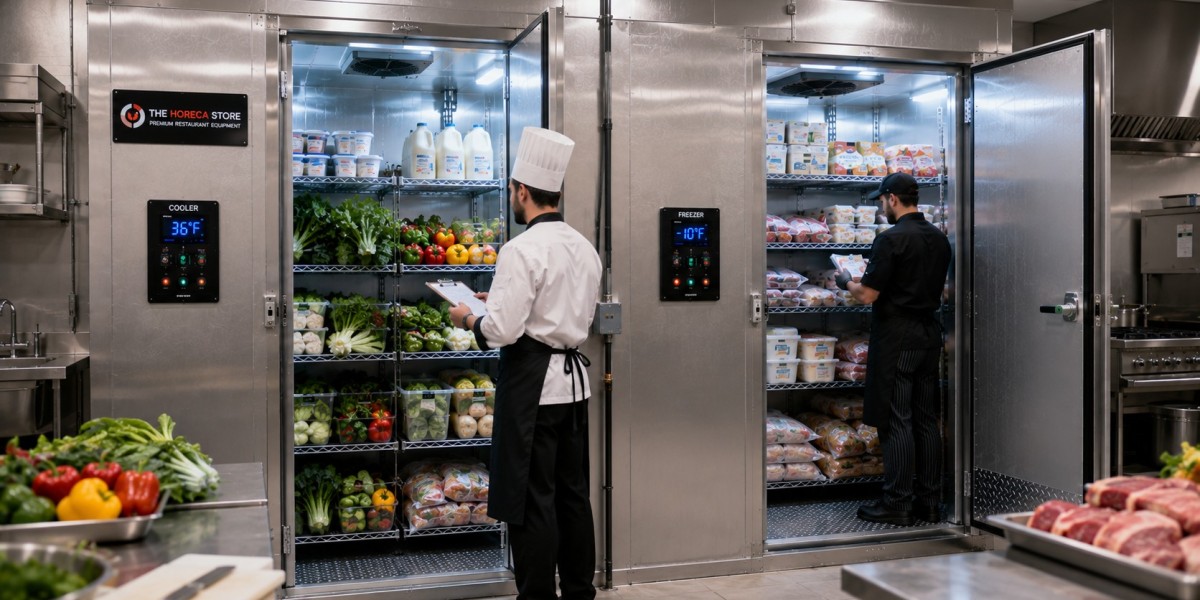
A walk-in cooler is generally used for refrigerated products that need to remain chilled, such as fresh produce, dairy products, beverages, meats, seafood, sauces, and prepared foods.
A walk-in freezer is designed for frozen products that require significantly lower storage temperatures, such as frozen meats, seafood, vegetables, desserts, fries, ice cream, and other frozen ingredients.
Depending on the business, walk-in refrigeration can be installed indoors or outdoors and may be configured in different sizes and layouts.
Some businesses use separate walk-in coolers and freezers, while others may require multiple temperature-controlled storage areas for different product categories.
Why Do Businesses Need Walk-In Refrigeration?
As a foodservice business grows, standard refrigerators may no longer provide enough storage capacity.
A restaurant that purchases ingredients in bulk, for example, may quickly fill several reach-in refrigerators. A supermarket may need substantial refrigerated space for beverages, dairy, produce, meat, and prepared foods.
Walk-in refrigeration provides a centralized storage solution that can accommodate larger quantities of inventory.
Benefits include:
High-volume storage capacity
Easier inventory organization
Convenient employee access
Better use of vertical and floor space
Centralized food storage
Support for bulk purchasing
Easier stock management
Flexible storage layouts
The right system can become an important part of a business's overall inventory and kitchen workflow.
Walk-In Coolers vs. Walk-In Freezers
Although walk-in coolers and freezers share a similar basic design, they serve different storage purposes.
Walk-In Coolers
Walk in freezers and coolers used for refrigerated products that need to remain chilled but not frozen.
Typical products include:
Fresh vegetables
Fruits
Dairy products
Fresh meats
Seafood
Beverages
Sauces
Prepared foods
Ingredients
Restaurants may use walk-in coolers as centralized storage for ingredients that are regularly transferred to kitchen preparation stations.
Walk-In Freezers
Walk-in freezers provide frozen storage for products that require much lower temperatures.
Common products include:
Frozen meats
Seafood
Frozen vegetables
French fries
Ice cream
Frozen desserts
Frozen prepared foods
Dough
Bulk frozen ingredients
The lower-temperature environment requires appropriate insulation, doors, refrigeration equipment, and operating procedures.
Businesses should select equipment specifically designed for the intended temperature range rather than treating a cooler and freezer as interchangeable systems.
Key Benefits of Walk In Freezers and Coolers
1. Large Storage Capacity
The most obvious advantage is capacity.
Employees can enter the storage area and organize products on racks, shelves, or other storage systems.
This makes walk-in refrigeration particularly useful for businesses that purchase ingredients in large quantities.
2. Better Inventory Organization
A walk-in storage area can be divided into sections according to product type, delivery schedule, or kitchen department.
For example, a restaurant may organize dairy products, produce, meats, beverages, and prepared foods in designated areas.
Good organization can help employees locate products faster and improve inventory control.
3. Convenient Access
Because employees can physically enter the storage area, they can access products from multiple shelves and locations without repeatedly opening a small refrigerator door.
This can be especially convenient when handling large quantities of inventory.
4. Supports Bulk Purchasing
Businesses may be able to purchase ingredients in larger quantities when sufficient cold storage is available.
Bulk purchasing decisions should always consider product shelf life, inventory turnover, storage capacity, and business demand.
5. Scalable Storage
Walk-in refrigeration can be designed in different sizes and configurations.
This allows businesses to choose a system based on current storage requirements and, where practical, anticipated growth.
Important Features to Consider
Insulated Panels
Insulation is critical to walk-in refrigeration performance.
High-quality insulated panels help maintain the desired internal environment by limiting heat transfer between the refrigerated space and surrounding environment.
The thickness and construction of the insulation should be appropriate for the intended cooler or freezer application.
Commercial Refrigeration System
The refrigeration system must be properly matched to the size, temperature requirements, location, and operating conditions of the walk-in.
Businesses should consider the manufacturer's specifications and professional installation requirements when selecting refrigeration equipment.
Durable Doors
Walk-in doors are opened frequently, so durability is important.
Look for appropriate insulation, strong hardware, reliable hinges, effective gaskets, and suitable door mechanisms.
Door seals should create a proper seal when closed.
Interior Lighting
Good lighting helps employees safely locate products inside the walk-in.
LED lighting can provide clear illumination while supporting energy-efficient operation, depending on the system.
Shelving and Storage Racks
The walk-in structure provides the refrigerated space, but shelving determines how efficiently that space is used.
Choose shelving appropriate for the products being stored and arrange it to maintain proper airflow.
How to Choose the Right Walk-In Cooler or Freezer
Determine Storage Volume
Start by calculating how much inventory your business currently stores.
Consider:
Daily product usage
Delivery frequency
Seasonal demand
Bulk purchasing
Menu requirements
Business growth
Product turnover
Do not simply estimate based on the number of products currently stored. Consider how the business is expected to operate over the next several years.
Choose the Appropriate Temperature Application
Determine whether you need refrigerated storage, frozen storage, or both.
A walk-in cooler and walk-in freezer have different operating requirements.
If a business needs both chilled and frozen storage, separate systems may be appropriate depending on the application and available space.
Consider Available Space
Measure the installation area carefully.
Consider not only the dimensions of the walk-in itself but also:
Door access
Employee movement
Refrigeration equipment
Service access
Ventilation
Electrical requirements
Drainage
Delivery and installation access
Professional planning is particularly important for large refrigeration systems.
Walk-In Cooler Organization Tips
Good organization can significantly improve the usefulness of a walk-in cooler.
Group similar products together and clearly label shelves or storage areas.
Use appropriate food-storage containers and keep products organized by category.
Maintain proper inventory rotation practices.
Avoid placing products directly where they could block air circulation.
Do not overload shelves or stack products in a way that interferes with airflow.
Keep frequently accessed products in convenient locations so employees do not need to search through the entire cooler.
Regular organization also makes inventory counting and restocking easier.
Walk-In Freezer Organization Tips
Freezer organization requires similar attention.
Group frozen products by category and use clearly labeled storage areas.
Store heavier products securely on appropriate shelving.
Keep products arranged so that cold air can circulate effectively.
Avoid blocking evaporator or air-distribution areas.
Regularly check frozen inventory for damaged packaging, freezer burn, expired products, or items that are no longer needed.
A clean and organized freezer makes it easier for staff to identify inventory and maintain efficient operations.
Energy Efficiency Considerations
Walk-in refrigeration can represent a significant operating expense because these systems often run continuously.
Energy performance can be influenced by:
Insulation quality
Door seals
Door-opening frequency
Refrigeration equipment
Ambient temperature
Lighting
Maintenance
Product loading
Installation quality
Businesses can support efficient operation by keeping doors closed whenever possible, maintaining door gaskets, avoiding unnecessary door openings, keeping refrigeration components clean, and following manufacturer maintenance recommendations.
Motion-activated or efficient interior lighting may also help reduce unnecessary energy use, depending on the system.
Maintenance of Walk In Freezers and Coolers
Regular maintenance is essential for reliable operation.
Inspect door gaskets regularly and replace damaged seals when necessary.
Keep interior surfaces clean and remove spills promptly.
Maintain condenser coils, evaporators, fans, and other refrigeration components according to manufacturer recommendations.
Check drainage systems and make sure water can drain properly.
Monitor internal temperatures regularly.
Pay attention to warning signs such as:
Unusual noises
Excessive frost
Water accumulation
Poor cooling
Temperature fluctuations
Damaged door seals
Refrigeration system cycling problems
Professional refrigeration technicians should handle technical repairs and servicing when required.
Walk-In Refrigeration vs. Reach-In Refrigerators
Reach-in refrigerators are ideal for quick-access storage and smaller inventory requirements.
They take up less space and can be convenient for kitchen preparation stations.
Walk-in refrigerators, on the other hand, are designed for significantly greater storage capacity.
Many commercial kitchens use both.
A walk-in cooler can serve as the primary bulk storage area, while reach-in refrigerators can hold frequently used ingredients closer to food preparation stations.
This combination can create an efficient storage and preparation workflow.
Why Choose The Horeca Store?
Choosing the right commercial refrigeration equipment is an important investment for any foodservice or retail business.
The Horeca Store provides commercial refrigeration solutions for restaurants, hotels, supermarkets, bakeries, catering businesses, grocery operations, and other professional applications.
Businesses looking for Walk in freezers and coolers can explore the walk-in refrigerator collection from The Horeca Store.
When comparing walk-in refrigeration options, consider storage capacity, temperature requirements, insulation, dimensions, door design, shelving, refrigeration systems, installation requirements, energy consumption, and maintenance.
Selecting equipment based on your actual storage needs can help create a more organized and efficient operation.
Frequently Asked Questions
What is the difference between a walk-in cooler and a walk-in freezer?
A walk-in cooler is designed for refrigerated products that need to remain chilled, while a walk-in freezer is designed for products that require frozen storage. Their insulation and refrigeration requirements differ because they operate at different temperature ranges.
Are walk-in freezers good for restaurants?
Yes. Walk-in freezers can be useful for restaurants that store large quantities of frozen ingredients, especially businesses with high-volume operations or bulk purchasing requirements.
How do I organize a walk-in cooler?
Organize products by category, use appropriate shelving, label storage areas, maintain inventory rotation practices, and avoid blocking airflow. Frequently used products should be placed where employees can access them easily.
How can I maintain a walk-in refrigerator?
Clean the interior regularly, inspect door gaskets, maintain refrigeration components according to manufacturer recommendations, monitor temperatures, check drainage, and schedule professional service when required.
Conclusion
Walk in freezers and coolers provide high-capacity refrigeration solutions for businesses that need more storage than traditional refrigerators and freezers can provide. Restaurants, supermarkets, hotels, catering companies, food distributors, and other commercial operations can use walk-in systems to organize large quantities of refrigerated and frozen inventory.
When selecting a walk-in system, businesses should consider storage volume, temperature requirements, insulation, door configuration, shelving, available space, refrigeration capacity, energy consumption, and maintenance requirements.
A well-designed walk-in cooler or freezer can make inventory management easier while supporting an efficient foodservice workflow. Combining walk-in storage with reach-in and undercounter refrigeration can further improve accessibility by keeping frequently used products close to preparation stations.
For professional commercial refrigeration solutions, The Horeca Store offers equipment designed for a wide range of foodservice and storage applications.