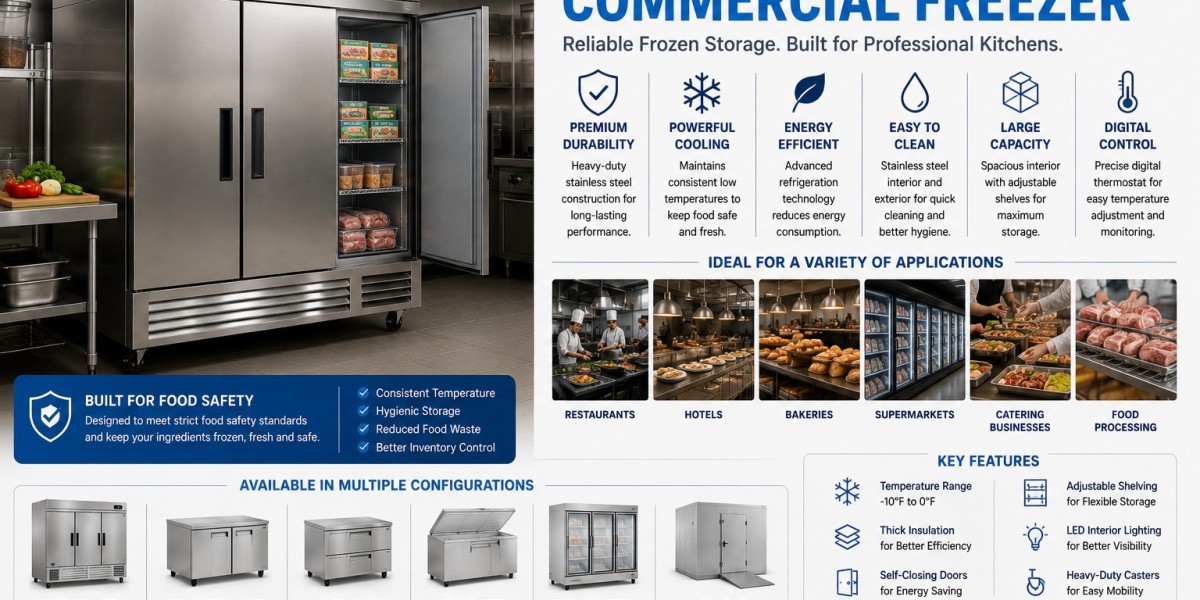

A dependable freezer is an essential part of any professional foodservice operation. Restaurants, hotels, bakeries, supermarkets, cafes, catering companies, and institutional kitchens rely on commercial freezers to store frozen ingredients safely, organize inventory, and maintain a consistent supply of products.
A stainless steel commercial freezer is especially popular because it combines commercial refrigeration performance with a durable, professional-grade exterior. Stainless steel construction is well suited to demanding kitchen environments where equipment is exposed to frequent cleaning, heavy use, moisture, and daily contact with employees.
Choosing the right freezer involves more than selecting a stainless steel finish. Businesses need to consider storage capacity, freezer configuration, dimensions, temperature control, shelving, energy efficiency, door design, installation requirements, and maintenance.
This guide explains what to look for when selecting a stainless steel commercial freezer and how the right equipment can support a more efficient foodservice operation.
What Is a Stainless Steel Commercial Freezer?
A stainless steel commercial freezer is a professional-grade freezer designed for businesses that need to store food and ingredients in frozen conditions.
The cabinet and exterior are commonly constructed or finished with stainless steel, providing durability and a clean appearance suitable for commercial kitchens.
These freezers are available in several configurations, including:
Upright reach-in freezers
Two-door commercial freezers
Three-door commercial freezers
Undercounter freezers
Worktop freezers
Chef base freezers
Walk-in freezers
Specialty commercial freezer systems
The ideal configuration depends on the business's storage volume, available floor space, menu, and workflow.
Why Choose Stainless Steel for a Commercial Freezer?
Stainless steel is widely used throughout professional kitchens because it provides several practical advantages.
Durability
Commercial kitchen equipment is used much more frequently than household equipment. A stainless steel exterior can withstand regular handling and cleaning when properly maintained.
Easy Cleaning
Smooth stainless steel surfaces are generally easy to wipe down and maintain. This is important in foodservice environments where cleanliness is a daily priority.
Professional Appearance
Stainless steel gives commercial kitchens a consistent, professional appearance. It can complement other stainless steel equipment such as preparation tables, ovens, sinks, refrigerators, and cooking equipment.
Corrosion Resistance
Quality stainless steel can provide good resistance to corrosion under normal commercial conditions. However, proper cleaning and maintenance are still necessary to protect the surface.
Benefits of a Stainless Steel Commercial Freezer
1. Reliable Frozen Storage
Commercial freezers provide dedicated space for storing frozen ingredients and products.
Restaurants can use them for frozen meats, seafood, vegetables, fries, desserts, prepared foods, dough, and other products suitable for frozen storage.
2. Better Inventory Organization
A properly designed freezer can help employees organize products by category.
For example, a restaurant might designate separate shelves or sections for meat, seafood, vegetables, desserts, and prepared foods.
Better organization can make inventory checks faster and reduce the time employees spend searching for products.
3. Professional Construction
Commercial freezers are designed for demanding business environments.
Features such as durable shelving, insulated doors, commercial refrigeration components, and stainless steel exteriors can support regular daily use.
4. Easier Cleaning
Stainless steel surfaces can simplify routine cleaning when appropriate cleaning procedures are followed.
Employees can wipe exterior surfaces and handles regularly to maintain a professional appearance.
5. Long-Term Value
A commercial freezer is an important business investment. Choosing equipment with suitable construction and capacity can help support reliable operation over an extended period.
Actual lifespan depends on the model, usage, environment, installation, cleaning, and maintenance.
Types of Stainless Steel Commercial Freezers
Upright Reach-In Freezers
Upright freezers are among the most common options for restaurants and professional kitchens.
They provide vertical storage, which can help maximize capacity while conserving floor space.
One-, two-, and three-door configurations are available depending on the model.
Two-Door Commercial Freezers
Two-door freezers can provide additional storage capacity for medium- and high-volume foodservice operations.
The two sections can also make organization easier by allowing employees to separate different categories of frozen products.
Undercounter Freezers
Undercounter freezers are compact units designed to fit below counters or work surfaces.
They are useful for kitchens where space is limited or where employees need frozen ingredients close to a specific preparation station.
Worktop Freezers
Worktop freezers combine frozen storage with a usable work surface.
This can be valuable in compact kitchens where businesses need both storage and preparation space.
Walk-In Freezers
Walk-in freezers provide significantly greater storage capacity and allow employees to enter the refrigerated space.
They are often used by high-volume restaurants, hotels, supermarkets, catering companies, and food distribution businesses.
How to Choose the Right Stainless Steel Commercial Freezer
Determine Storage Capacity
Start by evaluating how much frozen inventory your business needs.
Consider:
Daily sales
Menu size
Frozen ingredient usage
Delivery frequency
Bulk purchasing
Seasonal demand
Future business growth
Avoid selecting a freezer based solely on its external dimensions. Internal storage capacity and usable shelving are equally important.
Measure Your Available Space
Measure the installation area before purchasing.
Consider the freezer's width, depth, and height along with door clearance and ventilation requirements.
Also consider how the equipment will be moved into the building. Doorways, hallways, elevators, and other access points should be checked before delivery.
Consider Door Configuration
A single-door freezer may be suitable for a smaller operation.
Two- and three-door models can provide greater storage and may improve access and organization for larger kitchens.
Choose a configuration that fits your available space and expected inventory.
Evaluate Shelving
Adjustable shelving can provide flexibility for products of different sizes.
Restaurants should consider the size of food containers, boxes, pans, and packages they typically store.
Important Features to Consider
Digital Temperature Controls
Digital temperature controls can make it easier for staff to monitor freezer operation and manage settings according to manufacturer specifications.
Temperature monitoring is particularly important when storing valuable frozen inventory.
Quality Insulation
Proper insulation helps maintain the freezer's internal environment.
Good insulation can also support refrigeration efficiency by reducing unnecessary heat transfer.
Door Gaskets
Door gaskets help create a seal around the freezer cabinet.
Inspect them regularly for cracks, gaps, or deterioration. A damaged gasket can allow warm air to enter and increase refrigeration workload.
Heavy-Duty Shelving
Commercial freezers should have shelving appropriate for the products being stored.
Shelves should be organized so that they do not obstruct internal airflow.
Automatic Defrost
Some commercial freezers use automatic defrost systems.
This can simplify maintenance, although businesses should understand the manufacturer's recommendations for cleaning and defrost-related procedures.
Energy Efficiency Considerations
Commercial freezers can operate around the clock, so energy consumption should be part of the purchasing decision.
Several factors can influence energy performance, including insulation quality, refrigeration components, door seals, ambient temperature, maintenance, and frequency of door opening.
Businesses can support efficient operation by:
Keeping doors closed when not needed
Avoiding unnecessary door openings
Maintaining door gaskets
Keeping ventilation areas clean
Avoiding excessive product loading
Maintaining appropriate clearance
Following manufacturer maintenance recommendations
Actual energy use varies between models and operating conditions.
How to Organize a Commercial Freezer
Proper organization helps employees locate ingredients quickly and supports inventory management.
Create designated areas for different product categories.
For example:
Upper shelves: Smaller or frequently used items
Middle shelves: Prepared foods and standard ingredient containers
Lower shelves: Larger or heavier products
The exact arrangement should follow appropriate food-safety procedures and the requirements of the products being stored.
Use clear labels and date information where applicable.
Practice appropriate inventory rotation so older products are used before newer stock.
Avoid blocking air vents. Refrigerated air needs to circulate around stored products for consistent performance.
Maintenance Tips
Regular maintenance is essential for protecting freezer performance.
Clean interior shelves and surfaces regularly. Remove expired or damaged products promptly.
Wipe the stainless steel exterior with appropriate cleaning products and methods recommended for the equipment.
Inspect door gaskets regularly.
Keep condenser and ventilation areas clean according to manufacturer instructions.
Monitor freezer temperatures regularly.
Watch for warning signs such as unusual noises, excessive frost, poor cooling, condensation, or unexpected temperature changes.
Professional refrigeration service should be scheduled according to manufacturer recommendations or whenever technical problems occur.
Stainless Steel Commercial Freezer vs. Household Freezer
Household freezers are designed for residential use and typically do not provide the capacity, durability, or configuration required for busy commercial kitchens.
A stainless steel commercial freezer is designed for professional environments and frequent access.
Commercial models can provide larger storage capacity, stronger construction, specialized shelving, commercial refrigeration systems, and configurations designed for foodservice operations.
For a restaurant or other professional food business, commercial equipment is generally the most appropriate choice for regular business use.
Why Choose The Horeca Store?
Selecting commercial refrigeration equipment from a specialized supplier can help businesses compare different freezer configurations according to their storage requirements.
The Horeca Store provides commercial refrigeration equipment for restaurants, hotels, cafes, bakeries, catering businesses, supermarkets, and other professional foodservice operations.
Businesses searching for a stainless steel commercial freezer can explore the commercial freezer collection from The Horeca Store.
When comparing freezer options, consider capacity, dimensions, door configuration, shelving, temperature controls, insulation, stainless steel construction, energy requirements, installation, and maintenance.
Selecting the right freezer can help businesses protect frozen inventory while supporting an organized and efficient kitchen.
Frequently Asked Questions
What is a stainless steel commercial freezer?
A stainless steel commercial freezer is a professional freezer designed for foodservice and retail businesses, typically featuring a stainless steel exterior or cabinet construction and refrigeration components designed for commercial use.
Why is stainless steel used for commercial freezers?
Stainless steel is durable, easy to maintain, professional in appearance, and well suited to commercial kitchen environments when properly cleaned and maintained.
Is a stainless steel commercial freezer good for restaurants?
Yes. Commercial stainless steel freezers are commonly used in restaurants, hotels, bakeries, catering operations, supermarkets, and other professional foodservice environments.
How do I maintain a stainless steel commercial freezer?
Clean the interior and exterior regularly, inspect door gaskets, maintain condenser and ventilation areas according to manufacturer instructions, monitor temperatures, avoid overcrowding, and arrange professional servicing when required.
Conclusion
A stainless steel commercial freezer can be an excellent investment for restaurants and other businesses that need reliable frozen storage in a demanding professional environment. Stainless steel construction provides a durable and professional solution, while commercial freezer configurations offer different capacities and layouts for a variety of applications.
Before purchasing, businesses should evaluate storage requirements, available space, door configuration, shelving, temperature controls, insulation, energy consumption, installation needs, and maintenance requirements.
A smaller restaurant may benefit from an upright or undercounter freezer, while a high-volume operation may require a two-door, three-door, or walk-in freezer. Choosing the right size and configuration can help maximize storage without unnecessarily consuming valuable kitchen space.
For professional refrigeration solutions, The Horeca Store offers commercial freezer equipment suitable for restaurants, hotels, cafes, bakeries, catering companies, supermarkets, and other foodservice businesses.