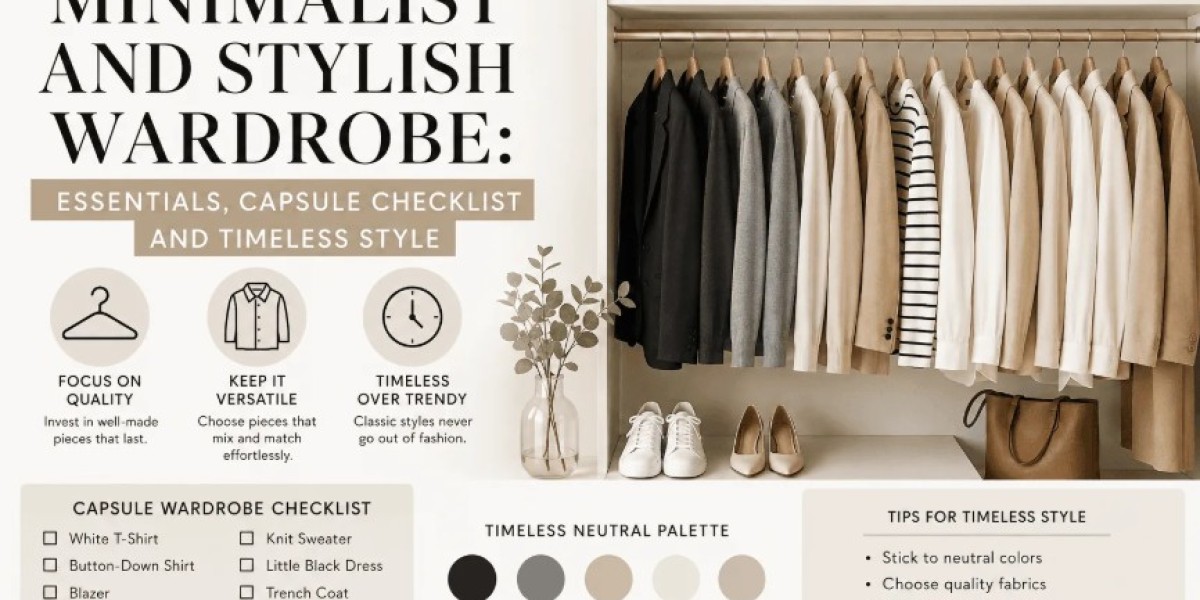

Building a stylish wardrobe does not always mean owning a large collection of clothes. A thoughtfully planned wardrobe can provide plenty of outfit combinations while keeping the closet organized, practical, and easy to manage. A capsule wardrobe checklist is a useful starting point for anyone who wants to simplify their clothing choices without giving up personal style. The idea is to select versatile pieces that can be worn in different combinations and for different occasions. Instead of purchasing clothes simply because they are trending, focus on items that fit comfortably, coordinate with existing pieces, and suit your everyday lifestyle. A practical foundation can include well-fitting jeans, tailored trousers, neutral T-shirts, classic shirts, knitwear, a versatile cardigan, a blazer, a simple dress, a lightweight jacket, comfortable sneakers, everyday flats, and a pair of polished shoes. The exact number of items does not have to be fixed because everyone's lifestyle and clothing needs are different. Someone working in an office may need more formal pieces, while someone with a casual routine may prefer relaxed trousers, denim, shirts, sweaters, and comfortable footwear. The important point is that each item should have a clear purpose and ideally work with several other pieces. Neutral shades such as white, black, cream, beige, navy, gray, brown, and denim can create a flexible foundation, while a few favorite colors or patterns can add personality. Accessories such as belts, scarves, handbags, watches, and simple jewelry can further expand outfit possibilities without filling the closet with unnecessary clothing. When selected carefully, a capsule wardrobe can make getting dressed easier, reduce decision fatigue, and encourage more intentional shopping habits.
A capsule wardrobe essentials list can help organize the most important categories of clothing and ensure that the wardrobe covers everyday needs without becoming overcrowded. Tops are usually one of the easiest places to begin because basic T-shirts, button-down shirts, blouses, lightweight sweaters, and versatile knitwear can be combined with multiple bottoms. For bottoms, a pair of classic jeans, tailored trousers, comfortable casual pants, and perhaps a skirt can provide variety depending on personal style. Outerwear should also be considered because a well-chosen blazer, cardigan, jacket, trench coat, or lightweight coat can completely change the appearance of a simple outfit. For occasions that require something more polished, a simple dress or a versatile coordinated outfit can be useful. Footwear should be selected according to lifestyle, but comfortable sneakers, everyday flats or loafers, and one more formal option can cover many situations. A capsule wardrobe checklist can also include practical accessories because small details can make basic clothing feel different from one day to the next. A structured handbag, simple belt, scarf, watch, sunglasses, and understated jewelry can add personality without requiring a large investment in additional clothing. The best selection depends on climate, work requirements, social activities, and personal preferences, so there is no universal list that everyone must follow. Someone living in a warm climate may need more breathable shirts and lightweight trousers, while someone in a colder region may prioritize sweaters, coats, boots, and layering pieces. The purpose of the list is simply to provide a framework that helps identify useful essentials and avoid buying items that do not have a clear role in the wardrobe.
Color coordination is another important part of creating a functional wardrobe because clothing becomes much easier to mix and match when the colors work naturally together. A capsule wardrobe essentials list can begin with a small group of neutral colors that form the foundation of the closet. Black, white, cream, beige, gray, navy, brown, and denim are popular choices because they can be combined in many different ways. However, a capsule wardrobe does not need to be completely neutral. Adding a few favorite colors can make the collection feel more personal and prevent outfits from becoming repetitive. For example, someone might use navy and cream as foundation colors and add olive green or burgundy as accents, while another person may prefer black and white with touches of blue or soft pink. Patterns can also be included as long as they coordinate with the rest of the collection. A striped shirt, subtle floral dress, checked jacket, or patterned scarf can become a statement piece without making the wardrobe difficult to style. The key is to make sure that new items have several possible combinations rather than being dependent on one specific outfit. This is where a capsule wardrobe checklist becomes particularly useful because it encourages you to think about the relationship between pieces before making a purchase. Before adding anything to the closet, consider whether it works with your existing tops, bottoms, shoes, and outerwear. If a new garment can create several outfits, it is likely to provide more long-term value than a piece that can only be worn in one particular combination.
A successful capsule wardrobe should also prioritize comfort and quality because clothes that look good but feel uncomfortable are unlikely to become regular favorites. When creating a capsule wardrobe essentials list, consider fabrics, construction, fit, and how frequently each piece will be worn. Everyday clothing should generally be comfortable enough for long periods of use, while workwear and occasion pieces should provide an appropriate combination of comfort and polish. Natural and breathable materials can be particularly useful for frequently worn clothing, while durable fabrics may be preferable for trousers, jackets, and outerwear that need to withstand regular use. Fit is equally important because even a high-quality garment may not look or feel its best if the proportions are wrong. Tailoring can sometimes transform a basic piece into a much more polished part of the wardrobe. Care requirements should also be considered before buying something because delicate clothing that requires constant maintenance may not be practical for a busy lifestyle. A capsule wardrobe checklist can therefore include not only the types of garments you need but also questions about whether each piece is comfortable, durable, easy to care for, and suitable for your regular routine. Investing in a few reliable pieces can often be more useful than buying many inexpensive garments that quickly lose their shape or become difficult to wear. The objective is to create a closet in which the majority of items are genuinely useful rather than simply taking up space.
Seasonal planning can make a capsule wardrobe even more practical because clothing requirements naturally change throughout the year. A capsule wardrobe essentials list can be divided into year-round basics and seasonal additions, allowing the main collection to remain consistent while certain pieces are rotated as the weather changes. Lightweight T-shirts, classic trousers, jeans, and versatile shirts can form the foundation throughout the year, while sweaters, coats, scarves, and boots can be introduced during colder months. In warmer weather, linen shirts, breathable dresses, lightweight trousers, and comfortable sandals may become more useful. Seasonal storage can also help keep the closet organized because clothing that is not appropriate for the current weather can be stored separately. However, some layering pieces can remain accessible throughout the year because weather can change unexpectedly. A capsule wardrobe checklist can help identify these versatile items and prevent the wardrobe from becoming unnecessarily large. Instead of buying a completely new collection every season, consider how existing clothing can be restyled with different layers and accessories. A simple dress can work during multiple seasons when paired with different footwear and outerwear, while a classic shirt can be worn alone during warmer weather and layered beneath a sweater or jacket when temperatures fall. This approach saves closet space while also encouraging creativity. Seasonal updates can be limited to a few carefully selected additions that genuinely fill a gap rather than simply following temporary fashion trends.
Finally, the best capsule wardrobe is one that reflects your real lifestyle rather than an idealized version of how you think you should dress. A capsule wardrobe checklist should therefore be personalized according to work, travel, social activities, hobbies, climate, comfort preferences, and individual taste. Someone who works from home may need more comfortable everyday clothing and fewer formal outfits, while someone who attends meetings regularly may require a stronger selection of blazers, tailored trousers, shirts, and polished footwear. A person who travels frequently may prioritize wrinkle-resistant fabrics and versatile layering pieces, while someone who spends most weekends outdoors may need practical clothing and durable footwear. Reviewing the wardrobe regularly can help identify which pieces are being worn and which ones are simply taking up space. Items that no longer fit, feel uncomfortable, or no longer represent your style can be repaired, donated, recycled, or replaced when necessary. A capsule wardrobe essentials list should evolve with these changes rather than remaining permanently fixed. The purpose of simplifying a wardrobe is not to restrict personal expression but to make it easier to appreciate and use the clothes you already own. Statement pieces, favorite colors, unique accessories, vintage garments, and special occasion items can all remain part of the collection when they have genuine value to you. By combining versatile basics with carefully selected personal pieces, it is possible to create a wardrobe that feels organized without becoming boring. Ultimately, a successful capsule wardrobe is about choosing intentionally, buying thoughtfully, maintaining what you own, and ensuring that your clothing supports the way you actually live. With the right balance of essentials, seasonal pieces, accessories, and personal favorites, a smaller and more organized wardrobe can still offer endless opportunities for stylish, comfortable, and confident outfits.