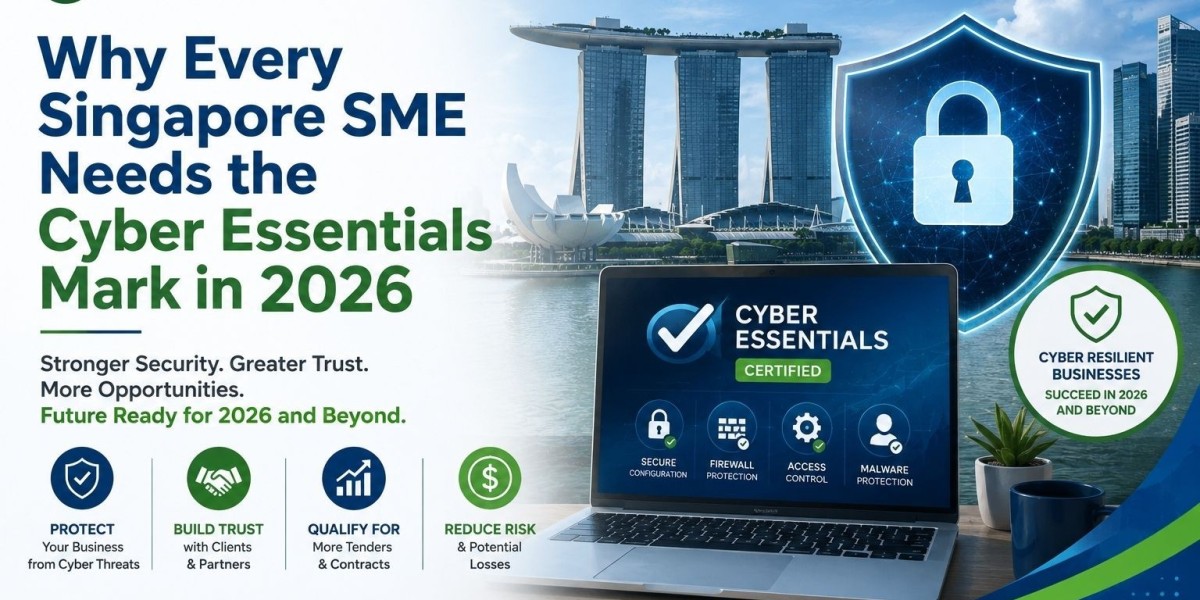

If you run a small or mid sized business in Singapore, you have probably heard clients or government tenders asking whether you hold the Cyber Essentials Mark. This is not a passing trend. It has become one of the clearest signals that a company takes basic cyber hygiene seriously, and more procurement teams are treating it as a baseline requirement rather than a nice to have.
This guide walks through what the Cyber Essentials Mark Singapore actually covers, who needs it, how the certification process works, and where facilities management ISO consultancy Singapore firms fit into the picture for organisations that manage physical sites alongside digital systems.
What Is the Cyber Essentials Mark Singapore
The Cyber Essentials Mark is a certification developed by the Cyber Security Agency of Singapore, known as CSA. It was created specifically for small and medium enterprises that may not have a dedicated IT security team but still need to protect themselves against common digital threats.
Unlike broader frameworks that assume a large security budget, the Cyber Essentials Mark Singapore focuses on practical, achievable controls. It looks at five areas that matter most for everyday business operations.
Assets, meaning the devices, systems, and data your business relies on
Secure and protect, covering how you configure and defend those assets
Update, which addresses patching and software maintenance
Backup, meaning how quickly you can recover from an incident
Respond, which looks at whether staff know what to do when something goes wrong
Companies that meet these baseline requirements receive the mark, which is valid for two years before renewal.
Who Should Pursue This Certification
Any Singapore registered business that handles customer data, processes payments, or relies on internet connected systems can benefit from this certification. That covers a wide range of industries, from retail and logistics to professional services and manufacturing.
Government agencies and larger corporations increasingly list the Cyber Essentials Mark Singapore as a supplier requirement. If your company wants to bid for public sector contracts or work with enterprise clients who have their own vendor risk policies, holding this mark often opens doors that would otherwise stay closed.
Facilities management companies fall squarely into this category. These firms typically manage building access systems, CCTV networks, HVAC controls, and tenant data across multiple properties. A breach in any one of these systems can affect several clients at once, which is exactly why building owners now expect their facilities partners to demonstrate strong cyber practices.
How the Certification Process Works
Getting certified is more structured than most business owners expect, but it does not require months of preparation if your systems are already reasonably organised.
Step one is a self assessment. You review your current setup against the five categories mentioned earlier and identify any gaps.
Step two involves closing those gaps. This might mean enabling multi factor authentication, setting up automatic software updates, or documenting a basic incident response plan.
Step three is submission and review. You submit your assessment through the official CSA portal, and depending on your risk profile, you may need supporting evidence or a short verification call.
Step four is the award itself. Once approved, your business receives the Cyber Essentials Mark Singapore, which you can display on your website and marketing materials.
Many companies choose to work with a consultant during this process, particularly if they operate across multiple sites or have a mix of legacy and modern systems. This is where the connection to facilities management ISO consultancy Singapore services becomes relevant, since these consultants often already understand how physical infrastructure and digital security intersect.
Where Facilities Management ISO Consultancy Singapore Fits In
Facilities management companies operate in a unique position. They are responsible for physical security, building operations, and increasingly, the digital systems that control those buildings. Smart locks, energy management platforms, and integrated security cameras all create potential entry points for attackers.
A facilities management ISO consultancy Singapore team typically helps organisations align with standards like ISO 27001 for information security or ISO 41001 for facilities management systems. When a facilities firm pairs this ISO consultancy work with Cyber Essentials Mark Singapore certification, they end up with a security posture that covers both the physical site and the digital layer running on top of it.
This combination matters because building management systems are often overlooked in standard IT audits. A consultancy that understands both facilities operations and cybersecurity frameworks can spot risks that a generic IT vendor might miss entirely.
For property owners choosing a facilities partner, asking about both ISO alignment and Cyber Essentials Mark status gives a clearer picture of how seriously that vendor treats risk management across the board.
Common Mistakes Businesses Make During Certification
Some businesses rush through the self assessment without actually implementing the required controls, which creates problems later if there is ever an audit or incident.
Others assume the certification is a one time task. In reality, the Cyber Essentials Mark Singapore requires renewal every two years, and the underlying controls need ongoing maintenance, not a single burst of effort before the application deadline.
A third common issue is treating cybersecurity as purely an IT department concern. For facilities management firms especially, building operations staff need to understand basic security practices too, since they are often the ones interacting with access control systems and connected devices day to day.
Practical Steps to Get Started
Start by listing every device and system your business depends on, including anything connected to the internet even indirectly. Many companies are surprised by how long this list turns out to be once printers, cameras, and smart devices are included.
Next, check whether your software is set to update automatically. Outdated software remains one of the most common ways attackers gain access to business systems.
Set up a basic backup routine if you do not already have one, and actually test that the backup works. A backup that has never been tested is not a reliable safety net.
Finally, write a short response plan. It does not need to be complicated. It just needs to tell staff who to contact and what immediate steps to take if something looks wrong.
Final Thoughts
The Cyber Essentials Mark Singapore was designed to be achievable for businesses without large security budgets, and that remains its biggest strength. It gives smaller companies a clear, structured way to demonstrate that they take digital risk seriously, which increasingly matters to clients, partners, and regulators alike.
For facilities management companies in particular, pairing this certification with proper facilities management ISO consultancy Singapore support creates a more complete risk picture, one that accounts for both the physical buildings they manage and the digital systems running inside them.
Frequently Asked Questions
Is the Cyber Essentials Mark Singapore mandatory for all businesses?
No, it is currently voluntary. However, many government tenders and large enterprise clients now require or strongly prefer suppliers to hold it, which makes it practically necessary for businesses in certain sectors.
How long does certification usually take?
Most straightforward businesses complete the process within four to eight weeks, though this depends on how many gaps need to be closed before submission.
Does the mark expire?
Yes, it is valid for two years. After that, businesses need to go through a renewal assessment to confirm their controls are still in place.
Can a facilities management company benefit from both ISO consultancy and Cyber Essentials certification?
Yes, and this combination is increasingly common. ISO frameworks address broader management systems, while Cyber Essentials focuses specifically on baseline digital security, so together they cover a wider range of operational risk.
What happens if my business fails the assessment?
There is no formal fail status. Instead, you receive feedback on which controls need improvement, and you can resubmit once those gaps are addressed.