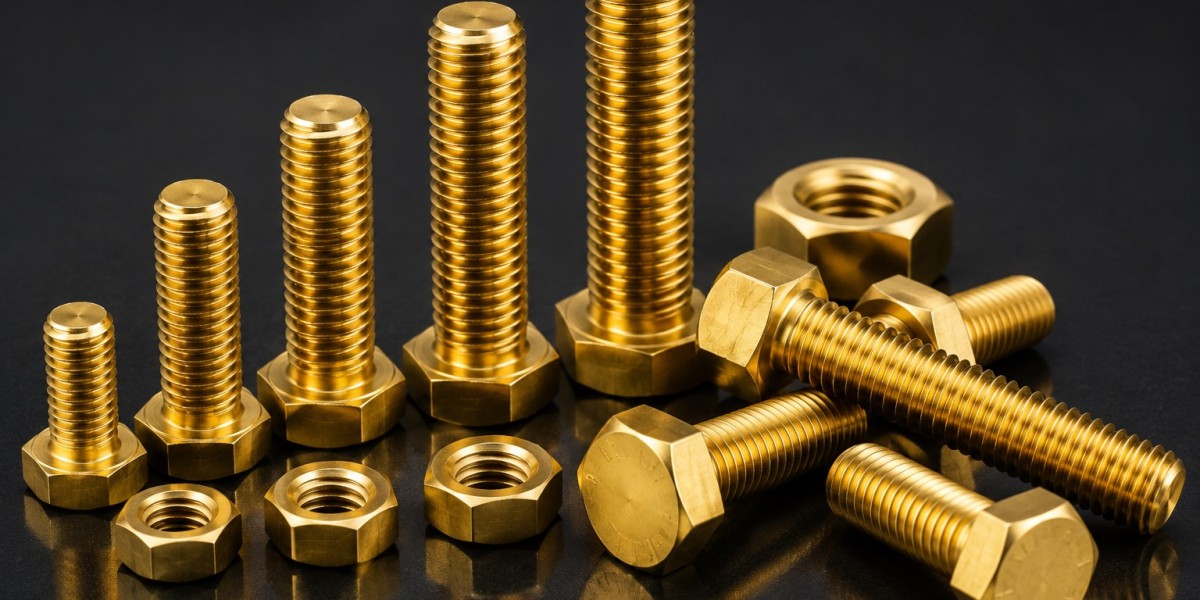

Then rust appears around a panel fastener, maintenance replaces the hardware, and procurement realises the original saving was barely worth discussing. Brass Bolts are selected to avoid that cycle in electrical, plumbing, architectural and light-engineering assemblies where moisture, conductivity or repeated servicing matters. Kiran Industries publishes sizes from M3 to M24, lengths from 6 mm to 150 mm and tensile strength of 300–500 MPa. That range also proves one thing: brass is a deliberate application choice, not a replacement for every steel bolt.
Cheap brass is expensive twice.
The Specification Behind Reliable Brass Bolts
Grade Comes Before Colour
Brass bolts is a copper-zinc alloy, but grade changes machinability, strength and corrosion behaviour. Kiran Industries lists C26000, C27000, CZ121 and CZ108 among its available options. Buyers should approve the grade, not a sample that merely “looks like brass.”
Threads Must Match the Joint
Options include metric, UNC and UNF threads, coarse or fine pitch, and hex, square or round heads. Here’s what buyers overlook: full-thread and partial-thread bolts do not carry and distribute load identically.
A supplier unable to state pitch, thread engagement and usable shank length is pushing a drawing problem onto your assembly team.
A Raw-Material Standard Is Not a Bolt Standard
ASTM B16/B16M covers free-cutting brass rod, bar and shapes used in screw machines. It does not, by itself, define every finished-bolt requirement. Nobody tells you this until the certificate arrives with the raw-material standard printed boldly while dimensional tolerance is missing.
Five Tests for Any Brass Bolt Supplier
1. Material Traceability
A good answer includes the grade, lot reference and supporting material records. “We use standard brass” is a bad answer because it avoids the only detail that matters.
2. Dimensional Control
Ask how diameter, length and thread pitch are checked. Kiran Industries identifies four dispatch checks: thread gauge, dimensions, material and surface finish. A supplier claiming “continuous inspection” but showing no final lot record has no defensible process.
3. Application Fit
The supplier should ask about load, moisture, electrical contact and mating material. A bad answer recommends the same alloy for a control panel, decorative railing and saline installation. That is lazy selling dressed up as confidence.
4. Finish Control
Natural, polished, nickel-plated and chrome-plated finishes are listed options. A good answer defines appearance and thread-fit acceptance; a bad one promises only a “shiny finish.”
5. Repeat-Supply Discipline
Confirm quantity, packing, dispatch schedule and repeat-batch consistency. A bad answer is, “We will supply the same as last time,” without a batch reference, packing standard or inspection record.
Most buyers inspect the first sample closely and relax by the third order. That is exactly when weak suppliers slip in mixed shades or undocumented substitutions.
How Brass Bolts Protect Cost, Uptime and Margin
Lower Corrosion-Related Replacement Risk
Brass is copper-zinc based and does not rust in the same manner as ordinary carbon steel. In damp assemblies, that can reduce seizure, staining and early replacement.
Which means maintenance teams spend less time removing damaged hardware.
Better Electrical Compatibility
Brass offers useful electrical conductivity and non-magnetic behaviour. Kiran Industries identifies switchgear, control panels and earthing systems among its applications, reducing material-compatibility surprises after installation.
Easier Servicing
Correctly specified brass threads can be loosened and retightened without the same rust binding associated with untreated steel. And yet, over-torque is a real risk. Installers can strip brass threads by treating them like high-tensile steel.
Cleaner Visible Assemblies
Natural brass can remain exposed in architectural hardware, furniture fittings and lighting assemblies. That may remove a cap, cover or paint step from the bill of materials.
Lower-Sparking Behaviour
Brass is used in selected fuel and gas assemblies where low-sparking behaviour matters. This is not blanket approval for hazardous service; alloy, operating standard and system certification still control the decision.
Predictable Medium-Duty Strength
The published 300–500 MPa tensile range fits many light- and medium-duty uses. Buying brass for a primary high-load steel joint is a specification failure, not a material failure.
Brass Bolt Availability from Rajkot Across India
Kiran Industries operates from Shapar, Rajkot, Gujarat 360024. As Brass Bolts Manufacturers, we serve electrical, plumbing, machinery and architectural buyers seeking standard or customised supply.
Procurement teams comparing Brass Bolt Suppliers in India, Brass Bolt Wholesalers in India and Brass Bolt Dealers should look beyond price per piece. A Rajkot base can reduce supply-chain handoffs for many domestic orders, but geography means little without lot control. That distinction affects repeat-order risk. Our published range covers four finishes, three thread systems and M3–M24 sizes.
Why We Measure Fastener Quality Before Dispatch
We have manufactured industrial fasteners since 1985 and operate under ISO 9001:2015 certification. Our facility covers more than 50,000 square feet, with tensile testing, hardness testing, micrometers, gauges and thread-checking instruments.
We do not treat a clean surface as proof that a lot is ready.
We check thread fit, dimensions, material and finish before dispatch. That four-part routine matters because repeat-batch drift costs buyers more than the first approved sample.
Send the Specification, Not Just the Product Name
Send us the required grade, diameter, length, thread, head style, finish, quantity, application and drawing or sample. We respond to complete enquiries within one working day during our published 9:00 AM–6:00 PM business hours.
Our MOQ is specification-dependent. We cannot honestly give one universal minimum for standard M3–M24 sizes, plated parts and custom drawings, so we confirm the exact MOQ after reviewing your requirement.
We quote Brass Bolt Wholesalers, Brass Bolt Dealers and OEM buyers against technical inputs, not guesswork.
Brass Bolts Remain a Long-Term Procurement Decision
Brass Bolts remain valuable because they reduce corrosion risk, suit many electrical assemblies and keep visible joints presentable. Across a published M3–M24 range, grade and thread detail matter more than colour. Buyers who verify both early will face fewer disputes as orders move from sampling to repeat supply.
Frequently Asked Questions
1. Are Brass Bolts stronger than steel bolts?
Usually not. The published brass range is 300–500 MPa, while many steel grades are chosen for higher structural loads. Use brass where corrosion resistance, conductivity or appearance carries more weight.
2. What should I send to Brass Bolts Manufacturers?
Send the grade, diameter, length, pitch, head type, finish, quantity, application and drawing. An accurate quotation is difficult from a photograph where thread class or plated tolerance matters.
3. Do Brass Bolt Suppliers hold standard sizes?
Many stock commonly requested dimensions, but availability changes by grade and finish. Kiran Industries publishes an M3–M24 range; custom lengths or plated variants may need production time.
4. How do Brass Bolt Wholesalers price bulk orders?
Pricing usually depends on alloy grade, diameter, machining time, finish, quantity and packing. Metal-price movement can shorten quotation validity, so compare quotations issued during the same period.
5. Can Brass Bolt Dealers recommend the correct grade?
Experienced dealers can narrow the options after reviewing the application. Final approval should still come from the buyer’s engineer for load-critical, potable-water, marine or hazardous-area applications.
6. Why source from Brass Bolts Manufacturers in India?
Domestic sourcing can support metric dimensions, custom machining and shorter freight routes. The advantage exists only when material traceability and lot inspection remain consistent across repeat orders.
7. Are Brass Bolt Suppliers in India suitable for export orders?
Yes, when documentation, packing, finish tolerance and destination standards are agreed before production. Export suitability depends on the actual specification, not a marketing claim.