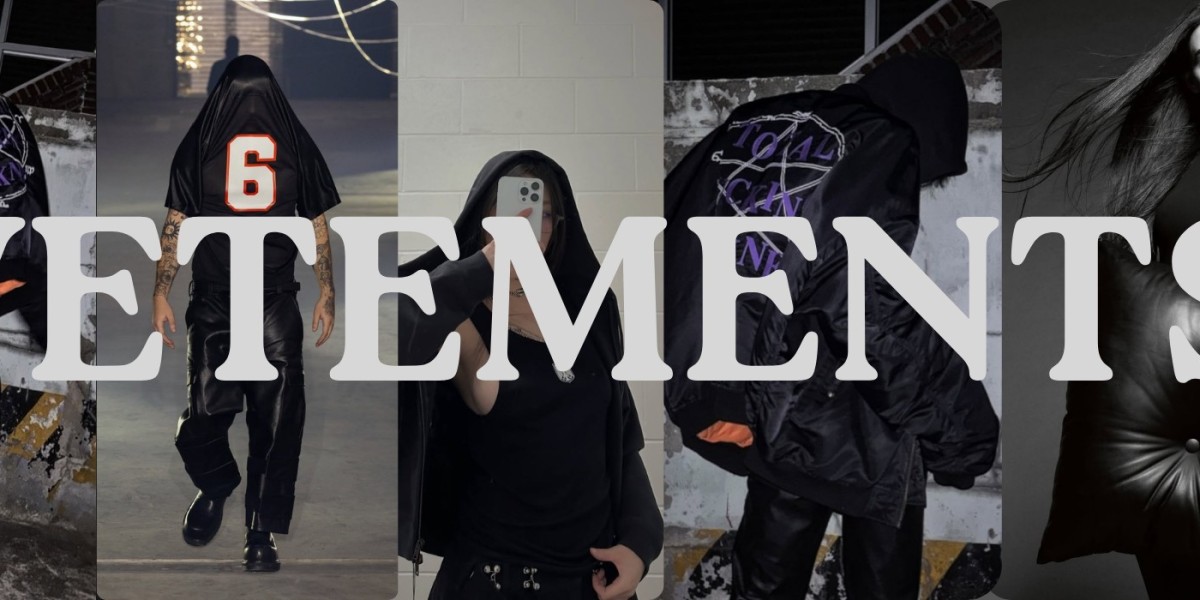

The Intersection That Transformed an Entire Industry's Identity
There is a corner in the map of contemporary fashion where two worlds that were never supposed to meet not only collided but merged so completely that their original boundaries became impossible to trace. That corner has a name, and the name is Vetements. When the brand arrived in Paris in 2014, the fashion world was operating on a geography that placed streetwear and high fashion at opposite ends of a very long road — separated by price, by audience, by cultural association, and by a hierarchy of taste that the luxury establishment had spent generations carefully constructing and jealously defending. Vetements walked straight down that road from both ends simultaneously and met in the middle with such creative force that the road itself was permanently rerouted. What the brand built at that intersection — the aesthetic, the attitude, the commercial model, and the cultural argument — has become the foundation on which the most significant fashion of the past decade has been constructed. This is the story of where streetwear meets high fashion, and why that meeting changed everything.
Two Worlds With No Common Language: The State of Fashion Before Vetements
To appreciate the magnitude of what Vetements accomplished, it is necessary to understand how absolutely separated the worlds of streetwear and high fashion were before the brand began dismantling the wall between them. High fashion — the world of the Paris runway, the luxury house, the carefully curated heritage collection — operated according to a set of values that were almost the direct inverse of those that governed streetwear culture. Luxury fashion prized rarity, craftsmanship, historical lineage, and an aesthetic vocabulary drawn from art, architecture, and the European cultural tradition. Their garments were expensive because they were meant to be, and that expense was part of their identity — a signal of membership in a world defined by access and exclusion.
Streetwear, by contrast, drew its energy from abundance and accessibility — from the culture of the skatepark, the basketball court, the hip-hop recording studio, and the urban neighborhood. Its garments were recognizable, replicable, and worn by millions. Its aesthetic vocabulary came from graphic design, sports branding, music culture, and the visual language of American cities. Its values were democratic, where luxury fashion was aristocratic, communal, where luxury fashion was individual, and rooted in the present moment, and where luxury fashion was anchored in tradition and history. These were not just different aesthetics — they were different philosophies of what clothing was for and what it meant to wear it.
The Founding Vision: A Refusal to Choose Between Two Worlds
Demna Gvasalia and the collective he assembled at Vetements did not look at these two worlds and see a choice to be made. They saw a false binary — an artificial separation maintained not by any genuine creative logic but by the commercial and cultural interests of the established institutions on both sides of the divide. The luxury establishment had reasons to keep streetwear at arm's length: admitting its aesthetic validity would mean admitting that the cultural foundations of luxury fashion's claim to superiority were more arbitrary than the industry liked to acknowledge. And the streetwear world had its own reasons to maintain its distance from high fashion: proximity to luxury risked contaminating the authentic, anti-establishment energy that gave streetwear its cultural authority.
Vetements rejected both of these positions simultaneously. The brand's founding vision was one in which the creative possibilities of streetwear — its graphic boldness, its comfort with the ordinary, its connection to real bodies and real lives — could be combined with the material quality, the construction precision, and the conceptual seriousness of high fashion to produce something that neither tradition could have arrived at alone. This was not a compromise between two aesthetics. It was a genuine synthesis — a third thing that contained both but reduced to neither, and that proved, through the evidence of its own existence, that the separation between the two worlds had always been a choice rather than a necessity.
The Hoodie Elevated: When the Most Democratic Garment Became Luxury
Nothing illustrates the Vetements approach to the streetwear-high fashion intersection more precisely than what the brand did with the hoodie. The hooded sweatshirt is the most democratic garment in the contemporary wardrobe — worn by children, by athletes, by students, by workers, by people of every age, income level, and cultural background on every continent. It carries no inherent status, no particular cultural aspiration. It is, in the most fundamental sense, clothing for everyone.
Vetements took this universal garment and subjected it to the full rigor of high fashion design and construction. The proportions were reconsidered from scratch — the body lengthened, the sleeves extended, the hood scaled and shaped with a precision that transformed a casual comfort piece into a sculptural object. The fabric was sourced at a level of quality that placed it entirely outside the register of conventional sportswear. The construction techniques applied were those of luxury tailoring, invisible in the finished garment but felt immediately in the way it moved and held its shape. The result was an object that was simultaneously completely recognizable as a hoodie and completely unlike any hoodie that had existed before — a garment that held both worlds within it without contradiction, and that made the case, more eloquently than any critical essay could, that the boundary between streetwear and high fashion had always been a fiction maintained by those who benefited from it.
Logo Culture Reclaimed: Corporate Identity as High Fashion Statement
One of the most enduring and influential contributions Vetements made to the conversation between streetwear and high fashion was its sophisticated engagement with logo culture. Logos and branded graphics have been central to streetwear since the earliest days of the culture — the Nike swoosh, the Adidas three stripes, the Supreme box logo are not decorations but identities, statements of affiliation that carry enormous cultural weight within the communities that recognise and value them. High fashion, historically, maintained a more ambivalent relationship with its own logos — using them selectively and with a restraint that reflected the luxury world's discomfort with anything that seemed too commercial or too obvious.
Vetements cut through this ambivalence with characteristic directness. By deploying corporate logos — not fashion logos, but the logos of logistics companies, fast food chains, and mass-market consumer brands — in a high fashion context, the brand simultaneously embraced and subverted both the streetwear tradition of logo culture and the luxury tradition of brand identity. The DHL shirt was not simply a piece of streetwear-inspired fashion. It was a philosophical statement about the nature of brand value, the arbitrariness of the distinction between prestigious and non-prestigious logos, and the power of context to transform the meaning of any visual symbol. It was streetwear logic applied with high fashion intelligence, and the result was something that neither tradition could have produced independently.
The Price Point Paradox: Luxury Cost, Street Soul
Perhaps the most discussed and most debated aspect of the Vetements model is the price at which it sells garments that are, in their visual language and cultural references, rooted in the most accessible registers of streetwear culture. A Vetements hoodie — a garment whose cultural DNA comes from the most democratic corner of the wardrobe — might carry a price tag that places it firmly in the upper reaches of the luxury market. This paradox has generated enormous critical attention, with observers divided between those who see it as an act of cynical exploitation and those who understand it as a deliberate and sophisticated creative position.
The Vetements price point is not arbitrary, and it is not simply a function of brand prestige inflating the cost of a basic garment. It reflects the genuine cost of the materials and construction techniques the brand applies to its work, the commercial reality of producing in limited quantities with premium suppliers, and the intentional use of price as a creative tool — a way of forcing the question of what value in fashion actually means and how it is constructed. By charging luxury prices for garments with street-level cultural references, Vetements creates a productive tension that neither the luxury nor the streetwear tradition could generate alone, and that makes every Vetements purchase a small act of engagement with one of the most important questions in contemporary fashion.
Mutual Transformation: How Each World Changed the Other
The meeting of streetwear and high fashion at Vetements was not a one-way street. Just as the brand brought streetwear's visual language and cultural energy into the luxury arena, it simultaneously brought high fashion's material seriousness and conceptual depth into a conversation that streetwear culture had sometimes lacked. The result was a mutual transformation — each tradition enriched and complicated by its encounter with the other in ways that produced possibilities neither could have imagined operating independently.
High fashion, through its engagement with streetwear energy, gained a relevance and a directness of communication that the industry's increasing insularity had been eroding. Collections became more legible to broader audiences, more connected to the experience of wearing clothing in the real world, and more willing to engage with the visual culture that most people actually inhabited rather than the refined aesthetic universe that luxury fashion had traditionally constructed for itself. Streetwear, through its encounter with high fashion rigour, gained a material and conceptual seriousness that elevated its most significant expressions from consumer products into genuine cultural artefacts. Vetements did not just bridge these two worlds — it changed both of them in the process.
The Designers Who Followed: An Industry Transformed by One Example
The measure of Vetements' influence on the fashion industry can be taken most clearly by surveying the landscape of contemporary fashion design and noting how thoroughly the streetwear-high fashion synthesis the brand pioneered has been absorbed into the mainstream of the industry. The major luxury houses — Balenciaga, Louis Vuitton, Givenchy, Dior, and many others — have all incorporated elements of streetwear culture into their collections in the years since Vetements demonstrated that this synthesis was not just creatively valid but commercially powerful. Sneakers became the most desirable products in the luxury footwear market. Hoodies appeared alongside couture gowns in the same runway presentations. Graphic t-shirts were priced at levels that would once have seemed inconceivable for such a simple garment.
The designers who drove these changes were, in many cases, directly influenced by Vetements hoodie — either through personal admiration for the brand's work or through the broader shift in cultural values that the brand had helped to produce. The language of contemporary fashion design — its comfort with proportion play, its willingness to deploy ordinary references in luxury contexts, its embrace of streetwear's graphic boldness — is significantly the language that Vetements invented at the intersection of two worlds that had previously refused to acknowledge each other's existence.
An Intersection That Became a Destination: The Legacy of a Meeting Point
The story of where streetwear meets high fashion is, at its heart, the story of what happens when a creative vision is strong enough to dissolve boundaries that seemed permanent and reveal the possibilities that were always waiting on the other side. Vetements built that intersection not through the gradual erosion of existing barriers but through a single, concentrated act of creative will — a decision to occupy the space between two worlds simultaneously and to make that simultaneous occupation not a compromise but a strength.
The intersection Vetements created has become one of the most productive addresses in contemporary fashion — a place where the industry's most interesting creative conversations continue to happen, where the questions the brand first raised about value, identity, and the meaning of luxury are still being worked out in new collections, new collaborations, and new experiments with proportion, material, and cultural reference. The brand did not just find the place where streetwear meets high fashion. It built it, named it, and populated it with work that continues to define what is possible there. That achievement, more than any single garment or collection or collaboration, is the true measure of what Vetements has contributed to fashion — and why the intersection it created will remain one of the most important addresses in the industry for generations to come.