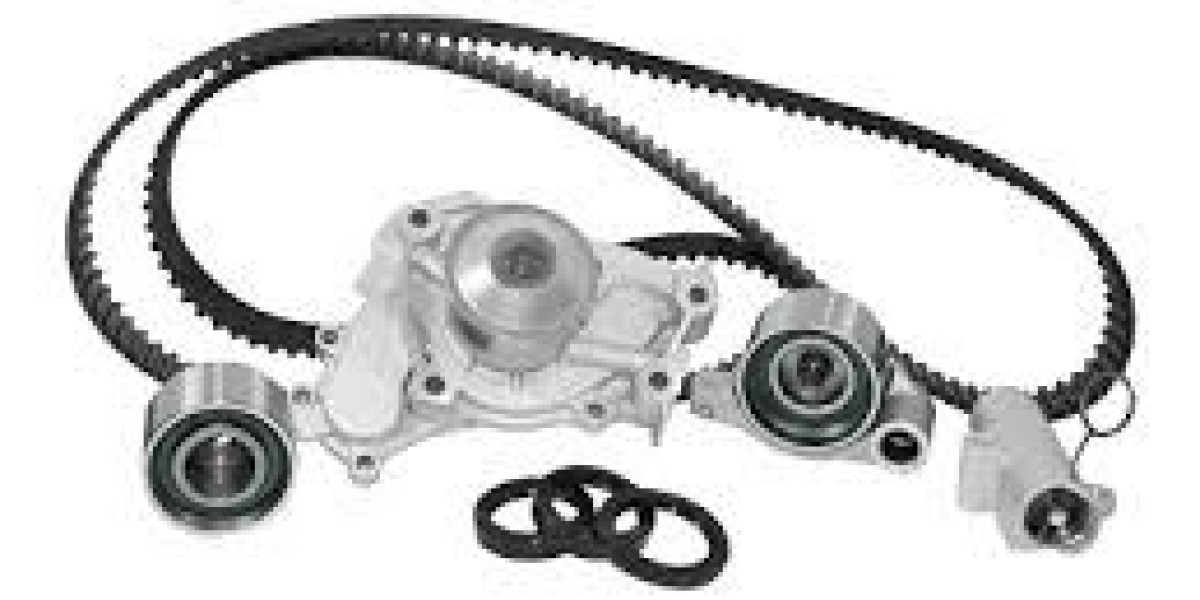

Choosing a timing belt kit shouldn't feel like a gamble for your business operations. Yet, many procurement managers face the nightmare of premature engine failure because of low-grade components that looked good on a spreadsheet.
As manufacturers, we see the internal wear patterns that others ignore. A kit is only as strong as its weakest pulley, and in the B2B world, a single snapped belt can lead to thousands in repair costs and lost delivery hours.
The real problem isn't just the belt; it's the lack of precision in the tensioners and bearings. When these small parts fail, they create a chain reaction that halts your entire fleet, proving that initial savings often lead to long-term debt.
The Hidden Costs of "Budget" Tensioners
In the B2B automotive sector, the focus is often on the belt itself. However, the tensioner and idlers are the actual heart of the timing system. When you source low-cost kits, the bearings inside these pulleys often lack the heat-treated durability required for heavy-duty cycles.
A seized bearing creates friction, which generates heat. This heat transfers directly to the belt, causing the rubber to become brittle. Before you know it, a belt rated for 100,000 miles snaps at 40,000. For a logistics company or a service fleet, this isn't just a mechanical issue—it’s a logistical disaster.
Signs Your Current Kits Aren't Making the Grade
If you are managing a large volume of vehicles, you need to watch for "silent" failure signals before the engine gives out:
Chirp and Squeal: High-pitched noises during cold starts often indicate a pulley bearing is losing lubrication.
Uneven Belt Wear: If the belt edges are frayed, your current tensioner is likely misaligned, a common trait of poorly manufactured kits.
Vibration: Excessive engine vibration at idle can mean the hydraulic dampener in the kit is failing to absorb harmonic shocks.
Why Precision Manufacturing Matters for B2B
As a manufacturer, we understand that material science is the difference between a reliable vehicle and a paperweight. Using high-grade chromium steel for bearings and EPDM (Ethylene Propylene Diene Monomer) for belts ensures that the kit can handle extreme temperature fluctuations.
Standard retail kits are often designed for "average" driving. B2B vehicles, however, face constant idling, heavy loads, and stop-and-go traffic. These conditions require a higher threshold of mechanical resistance. When we produce timing belt kits, we focus on the load-bearing capacity of the rollers to ensure they outlast the service interval, not just meet it.
Reducing Downtime with Synchronized Replacement
One of the biggest mistakes in fleet maintenance is "part-swapping"—replacing only the belt while leaving the old tensioner in place. This is a recipe for disaster. A synchronized kit replacement ensures that every component has a "zero-hour" start.
By sourcing directly from a manufacturer, you ensure that every part in the box—from the water pump to the smallest bolt—is engineered to the same tolerance levels. This consistency is what prevents the dreaded "mid-cycle failure" that haunts many maintenance managers.
Conclusion
As a dedicated manufacturer, NMR Bearing provides high-precision timing belt kits built for endurance. Secure your fleet’s future with our reliable, factory-direct supply chains today.