
Introduction
In an increasingly digital world, businesses are constantly looking for ways to improve customer interaction and streamline communication. One of the most effective solutions to emerge in recent years is chatbot development. Chatbots are intelligent software applications designed to simulate human conversation, providing instant responses and support to users. From customer service to sales and marketing, chatbots are revolutionizing how organizations engage with their audiences.
What is Chatbot Development?
Chatbot Development is the process of designing, building, and deploying automated conversational systems that can interact with users through text or voice. These bots can be integrated into websites, mobile apps, and messaging platforms such as WhatsApp, Facebook Messenger, and Slack.
Chatbots can range from simple rule-based systems that follow predefined scripts to advanced AI-powered bots capable of understanding natural language and learning from interactions.
Types of Chatbots
Rule-Based Chatbots
Rule-based chatbots operate on predefined rules and decision trees. They respond to specific keywords or commands and are best suited for handling simple queries. While they are easy to build, their capabilities are limited.
AI-Powered Chatbots
AI chatbots use technologies such as natural language processing (NLP) and machine learning to understand user intent and provide more accurate responses. These bots can learn from past interactions and improve over time, making them more effective for complex tasks.
Voice-Enabled Chatbots
Voice-enabled chatbots allow users to interact through speech rather than text. These are commonly used in virtual assistants and smart devices, offering a more natural and hands-free experience.
Key Components of Chatbot Development
Natural Language Processing (NLP)
NLP is a critical component that enables chatbots to understand and interpret human language. It allows bots to process user input and generate meaningful responses.
Backend Integration
Chatbots often need to connect with databases, APIs, and other systems to retrieve information or perform actions. For example, a chatbot may access order details or customer records to provide accurate assistance.
User Interface (UI)
The interface through which users interact with the chatbot plays an important role in user experience. A well-designed UI ensures smooth and intuitive communication.
Machine Learning
Machine learning allows chatbots to improve over time by analyzing user interactions. This helps in delivering more personalized and relevant responses.
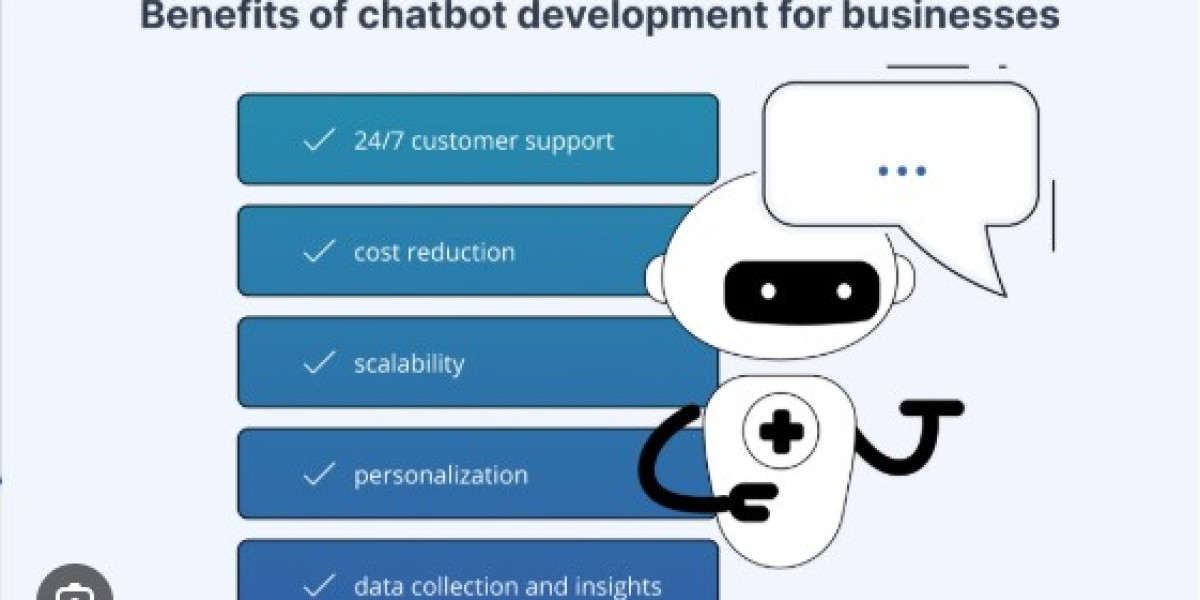
Benefits of Chatbot Development
24/7 Availability
One of the biggest advantages of chatbots is their ability to provide round-the-clock support. Customers can get assistance at any time without waiting for human agents.
Cost Efficiency
Chatbots reduce the need for large customer support teams, helping businesses save on operational costs.
Instant Responses
Unlike human agents, chatbots can handle multiple queries simultaneously and provide instant replies, improving customer satisfaction.
Scalability
As businesses grow, chatbots can easily handle increased volumes of interactions without compromising performance.
Use Cases of Chatbots
Customer Support
Chatbots are widely used to handle common customer inquiries, such as FAQs, order tracking, and troubleshooting. This reduces the workload on human agents.
E-commerce
In online shopping, chatbots assist customers in finding products, making recommendations, and completing purchases.
Healthcare
Chatbots are used to provide basic medical information, schedule appointments, and remind patients to take medications.
Banking and Finance
Financial institutions use chatbots to help customers check account balances, transfer funds, and receive financial advice.
Challenges in Chatbot Development
Despite their advantages, chatbots face several challenges. Understanding complex human language, including slang and context, can be difficult. Poorly designed chatbots may lead to frustrating user experiences.
Data privacy is another concern, as chatbots often handle sensitive information. Ensuring secure data handling and compliance with regulations is essential.
Additionally, maintaining a balance between automation and human interaction is important. Some situations still require human intervention for effective resolution.
Future Trends in Chatbot Development
The future of chatbot development is closely tied to advancements in artificial intelligence. Integration with voice assistants, improved NLP capabilities, and greater personalization are expected to enhance chatbot performance.
Chatbots are also becoming more proactive, initiating conversations based on user behavior and preferences. As technology evolves, chatbots will play an even more significant role in digital communication.
Conclusion
Chatbot Development is transforming the way businesses interact with customers by providing fast, efficient, and scalable communication solutions. With advancements in AI and machine learning, chatbots are becoming increasingly sophisticated and capable. While challenges remain, the benefits of chatbot technology make it a valuable tool for organizations looking to improve customer engagement and operational efficiency. As adoption continues to grow, chatbots are set to become an integral part of the digital experience.